
Interlocking Driveway Winter Prep: Prevent Heaving, Settling & Salt Damage in Simcoe County
An interlocking driveway is built to handle vehicles, weather and year-round use, but Ontario winters are hard on any outdoor surface.
In Simcoe County, the combination of freezing temperatures, repeated thawing, snowmelt, road salt, surface water, heavy vehicles and snow clearing can expose weaknesses that may not be obvious during summer. That does not mean every small movement is a major problem. But preparing the driveway before winter can help reduce unnecessary wear, make spring inspection easier, and identify drainage or settlement issues before they become more noticeable.
The most important factors are usually not the pavers themselves. They are the base, drainage, edge support, joint material and water movement around the driveway. This guide explains what Simcoe County homeowners should check before winter arrives — including proper interlocking driveway installation, drainage solutions, and seasonal property maintenance.
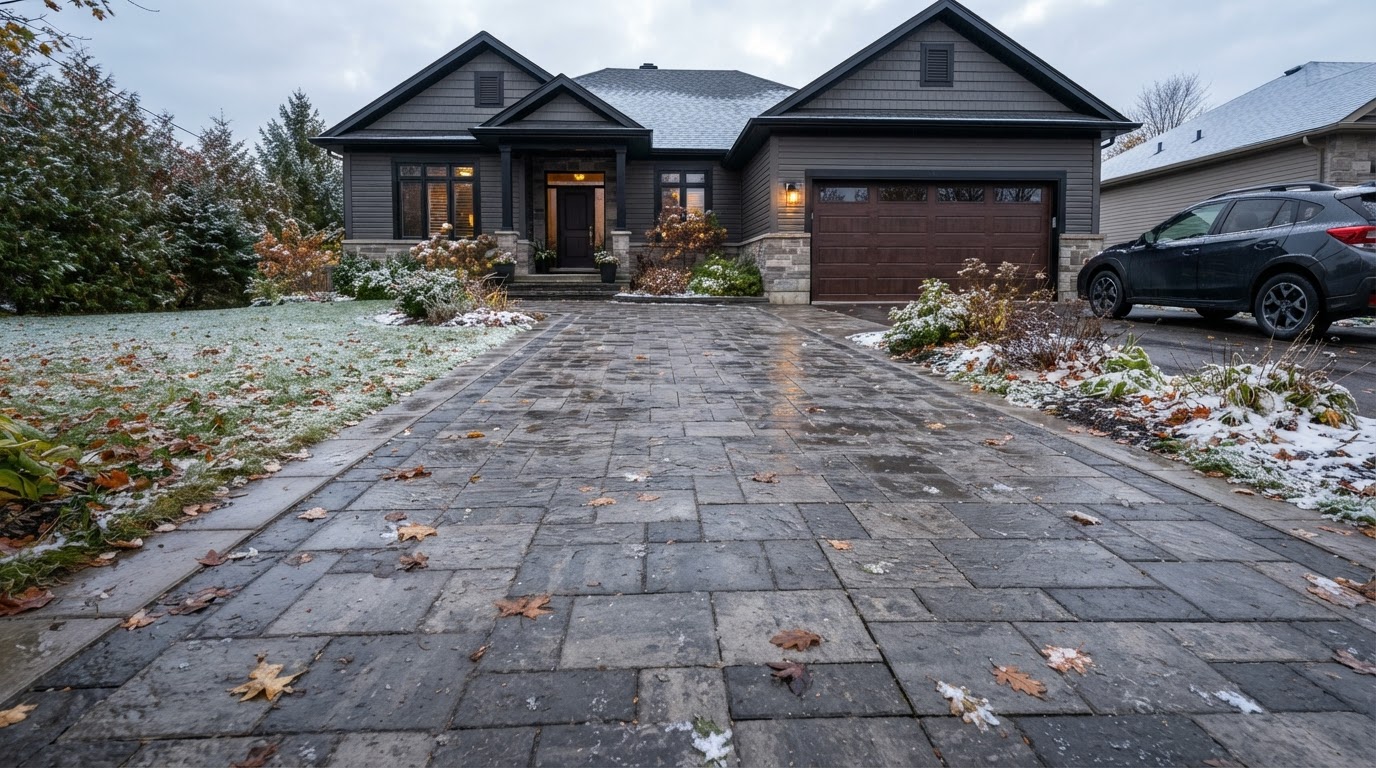
1. Why Ontario Winters Are Hard on Interlocking Driveways
Interlocking pavers move differently than poured concrete or asphalt. That flexibility is one of their advantages. A properly built interlocking surface can tolerate some seasonal movement because the pavers are individual units supported by a prepared base.
However, winter can expose weaknesses in the system. The biggest concerns are usually:
- Water entering low areas
- Poor drainage
- Inadequate base support
- Weak edge restraint
- Loss of joint material
- Repeated freeze-thaw cycles
- Snow-plow contact
- Heavy salt use
If water gets into unstable areas and freezes, it can expand. When temperatures rise, it thaws again. That cycle may repeat many times during an Ontario winter. If the base and drainage are functioning properly, the driveway is better prepared to handle those seasonal conditions.
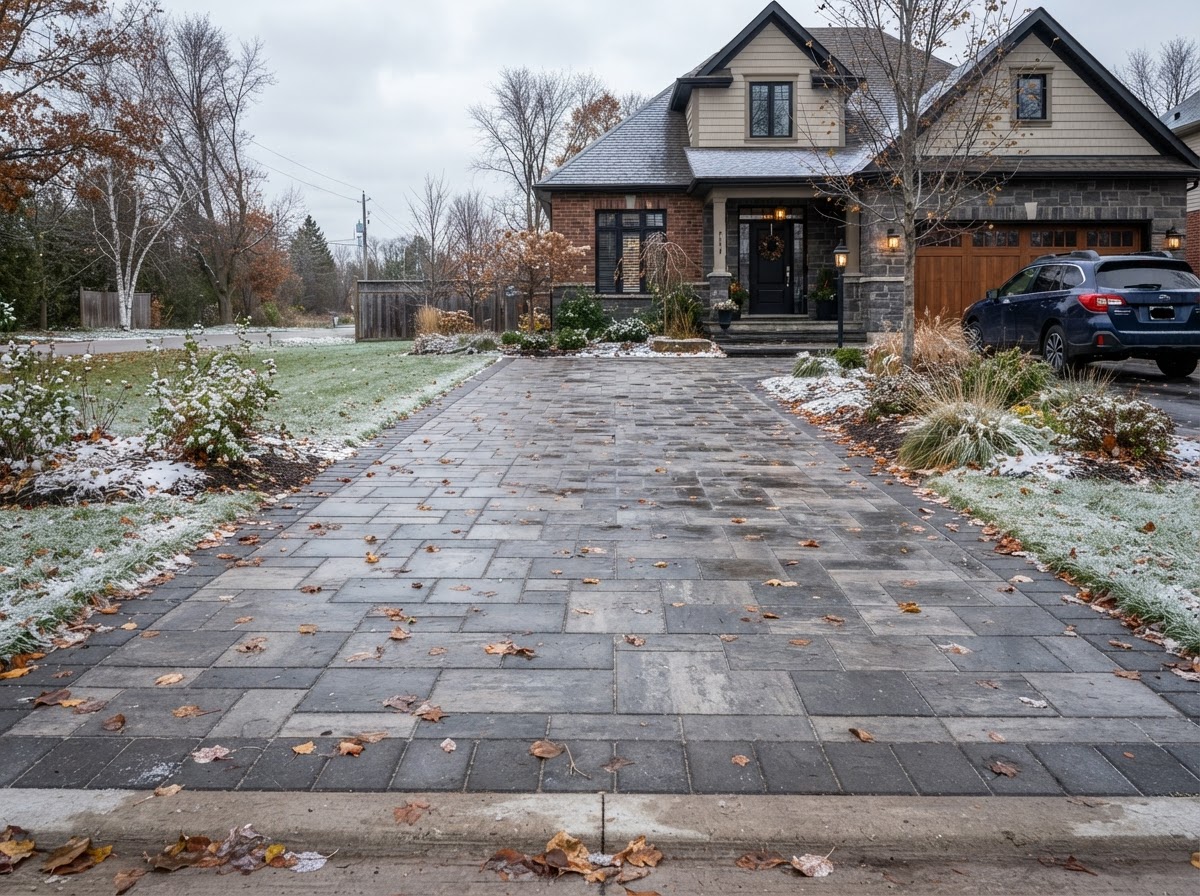
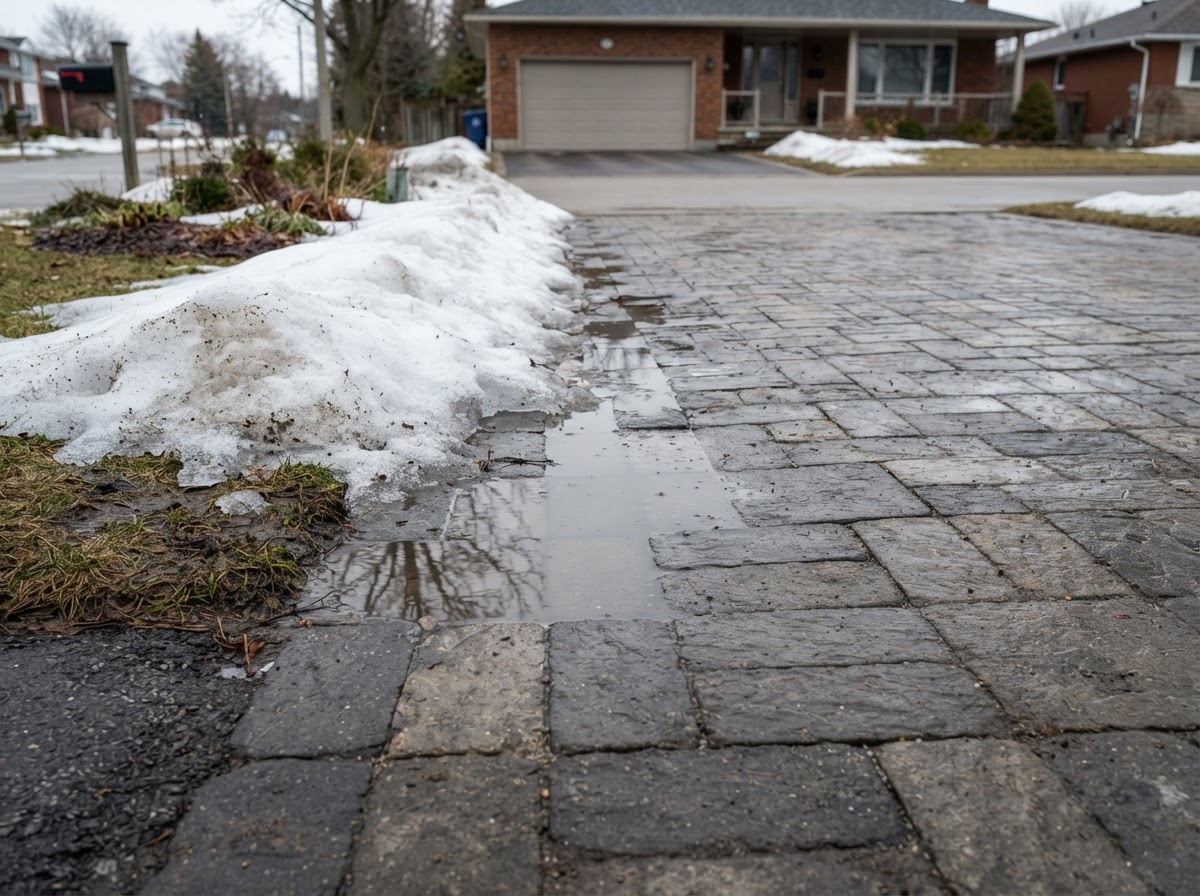
2. Check for Low Spots and Standing Water
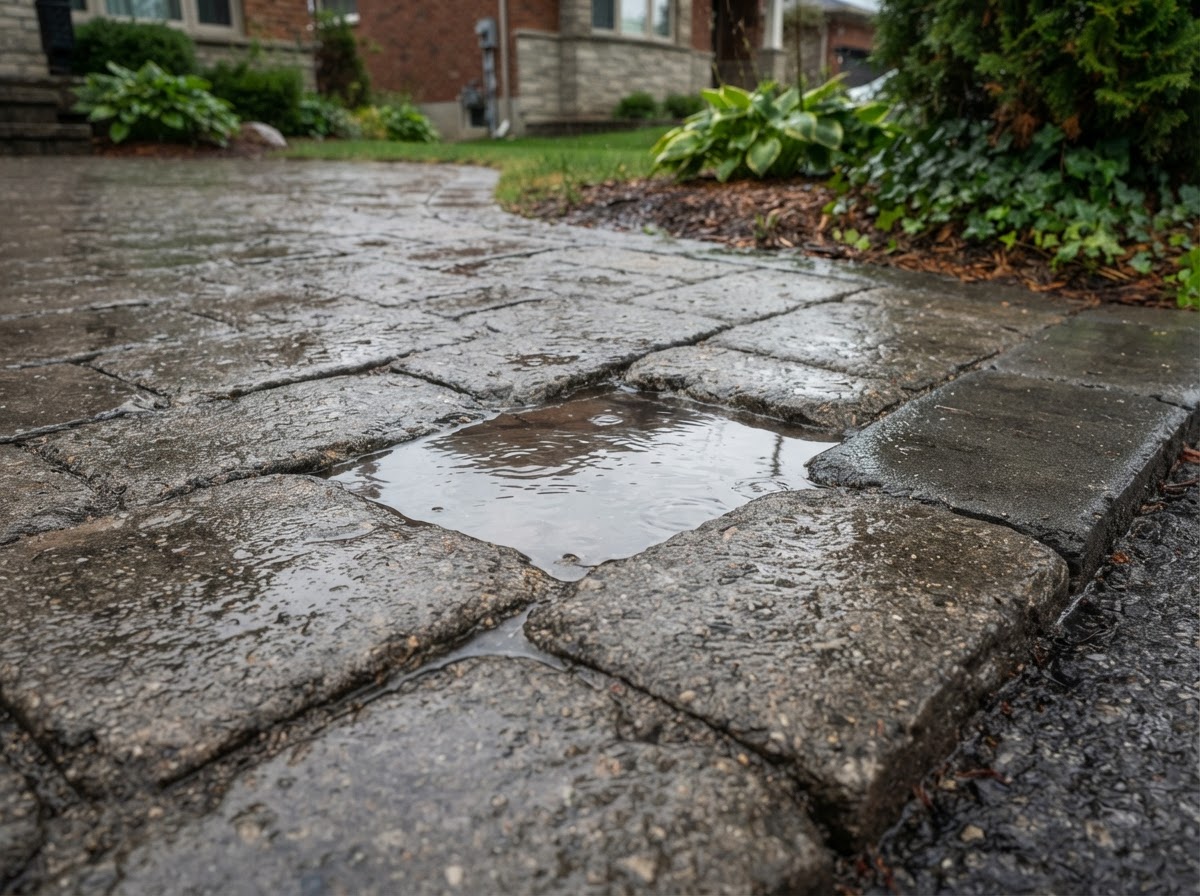
Before winter, inspect the driveway after rainfall. You are looking for areas where water sits rather than draining away. Pay attention to:
- Depressions in the driveway
- Pooling beside garage doors
- Water along paver borders
- Puddles near steps
- Low areas beside walkways
- Water collecting at the bottom of slopes
Repeated standing water is worth investigating. During winter, those same low spots may become ice-prone areas. In spring, they may also show signs of movement or settlement. A small puddle after a very heavy storm is not always a problem — the concern is repeated pooling in the same location.
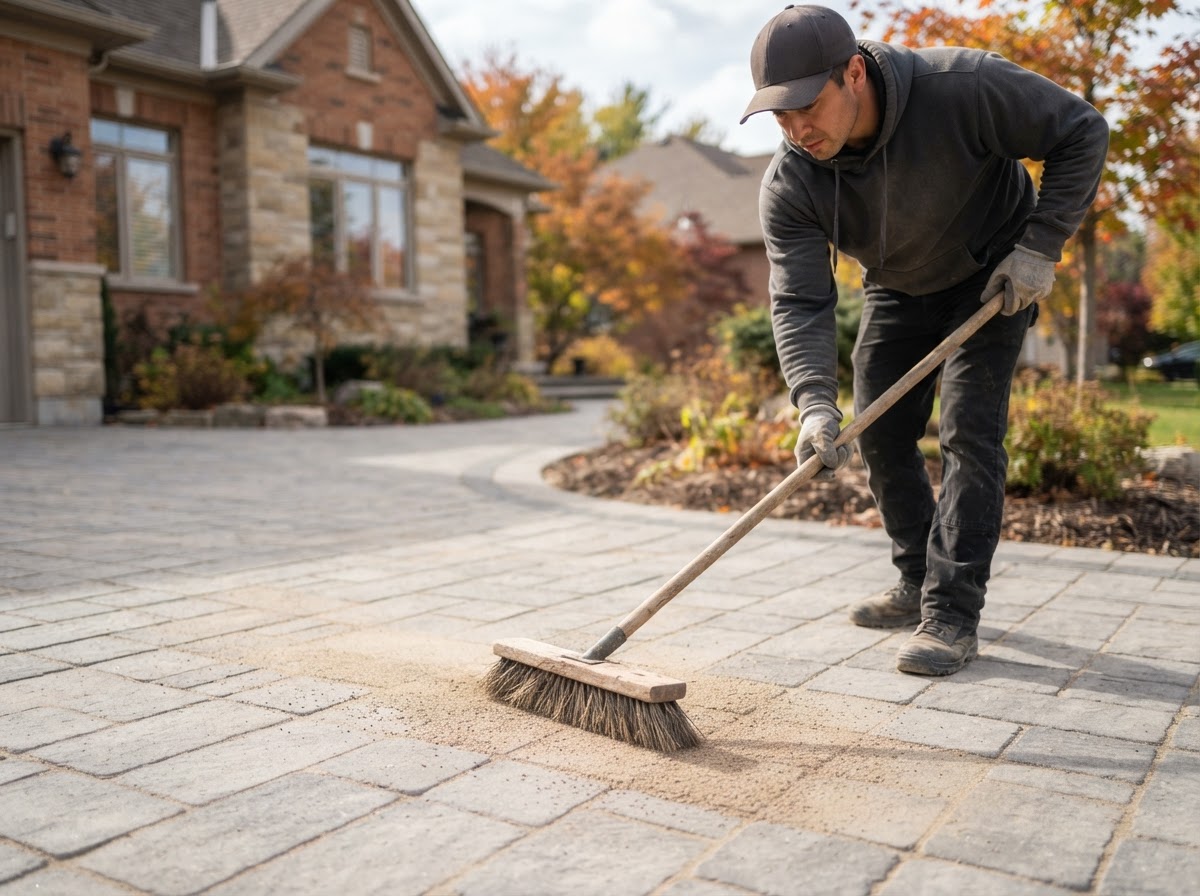
3. Inspect Joint Sand Before Winter
The material between interlocking pavers helps stabilize the surface. Over time, joint material can be reduced by rainfall, sweeping, pressure washing, vehicle traffic, snow clearing and natural wear.
If joints appear noticeably empty, the pavers may have less lateral support. Before winter, look for:
- Wide open joints
- Missing joint material
- Weeds growing heavily between pavers
- Areas where pavers appear loose
The correct repair method depends on the original installation and the type of joint material used. It is usually better to inspect the issue before simply adding material over the top.
4. Look for Loose or Spreading Edges
Driveway edges are important because they help keep the paver field contained. If the edge begins to move outward, nearby pavers may gradually spread or shift. Common signs include:
- Widening joints near the edge
- Pavers leaning outward
- Visible edge movement
- Loose border stones
- Settlement beside landscaped areas
Driveway edges can be affected by vehicle loads, erosion, poor support, nearby drainage, snow clearing and soil movement. If you notice edge movement before winter, take photos so you can compare the same area in spring. Properly constructed retaining walls and natural stone borders can help stabilize driveway edges.
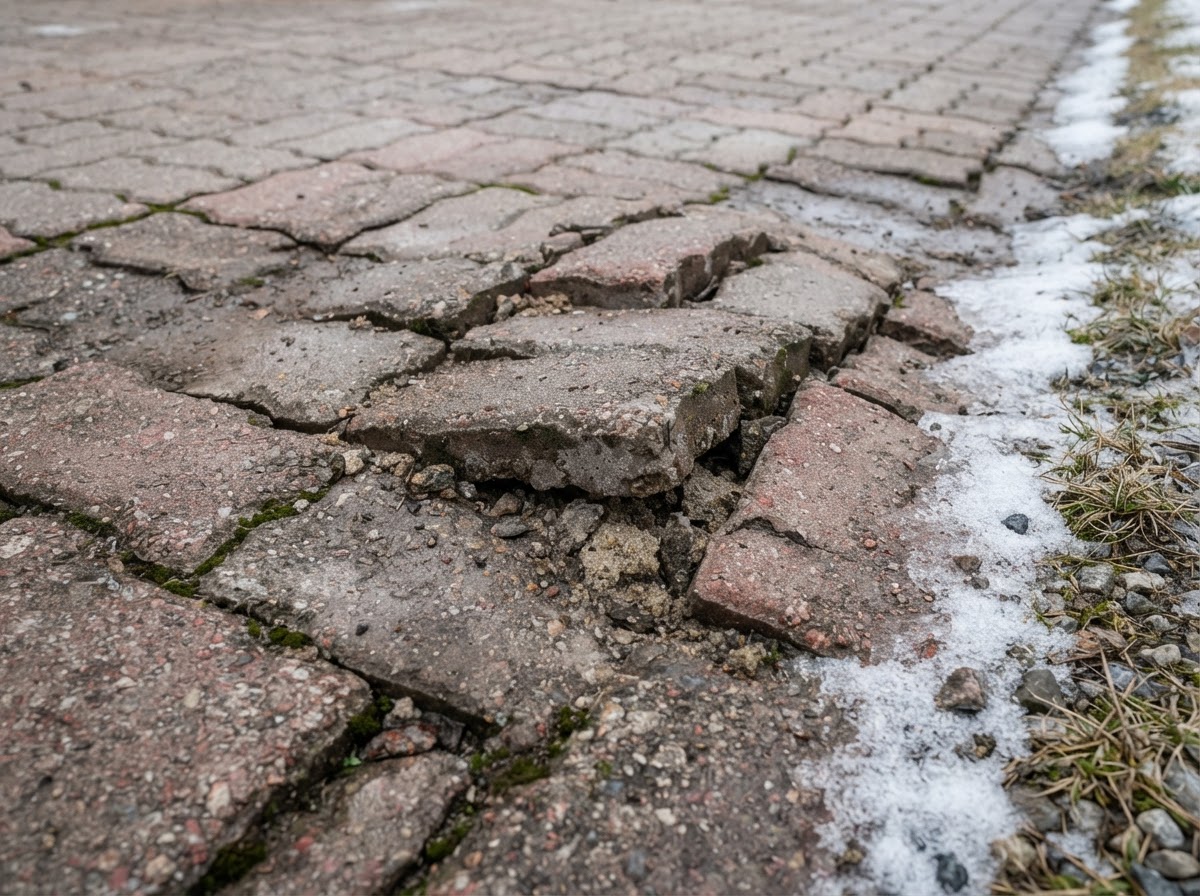
5. Watch for Early Signs of Settling
Interlocking driveways can develop localized settlement for different reasons. Look for:
- One section sitting lower than surrounding pavers
- Tire-track depressions
- Movement near garage thresholds
- Sunken areas around utility covers
- Settling near steps
- Uneven transitions to sidewalks or asphalt
Settlement does not automatically mean the entire driveway needs to be rebuilt. Sometimes the issue is localized. However, if water is also collecting in the same area, the drainage and underlying base should be considered as part of the repair. Simply lifting a few pavers without understanding why they settled may not solve the problem long term.
6. Why Base Preparation Matters
The visible pavers are only the top layer of an interlocking driveway. Much of the driveway's performance depends on what is underneath. A typical interlocking system may include:
- Excavated subgrade
- Compacted granular base
- Bedding layer
- Pavers
- Edge restraint
- Joint material
The exact construction depends on the site, soil, loads and project requirements. For driveways, the base needs to support vehicle traffic and seasonal conditions. Problems can occur when:
- The base is too shallow for the site
- Material is poorly compacted
- Water is trapped in the base
- Weak soil was not addressed
- Edge support is inadequate
- Drainage was not considered
This is why proper preparation is often more important than choosing the most expensive paver. Learn more about interlocking vs concrete driveways to understand the long-term benefits of a properly built paver system.
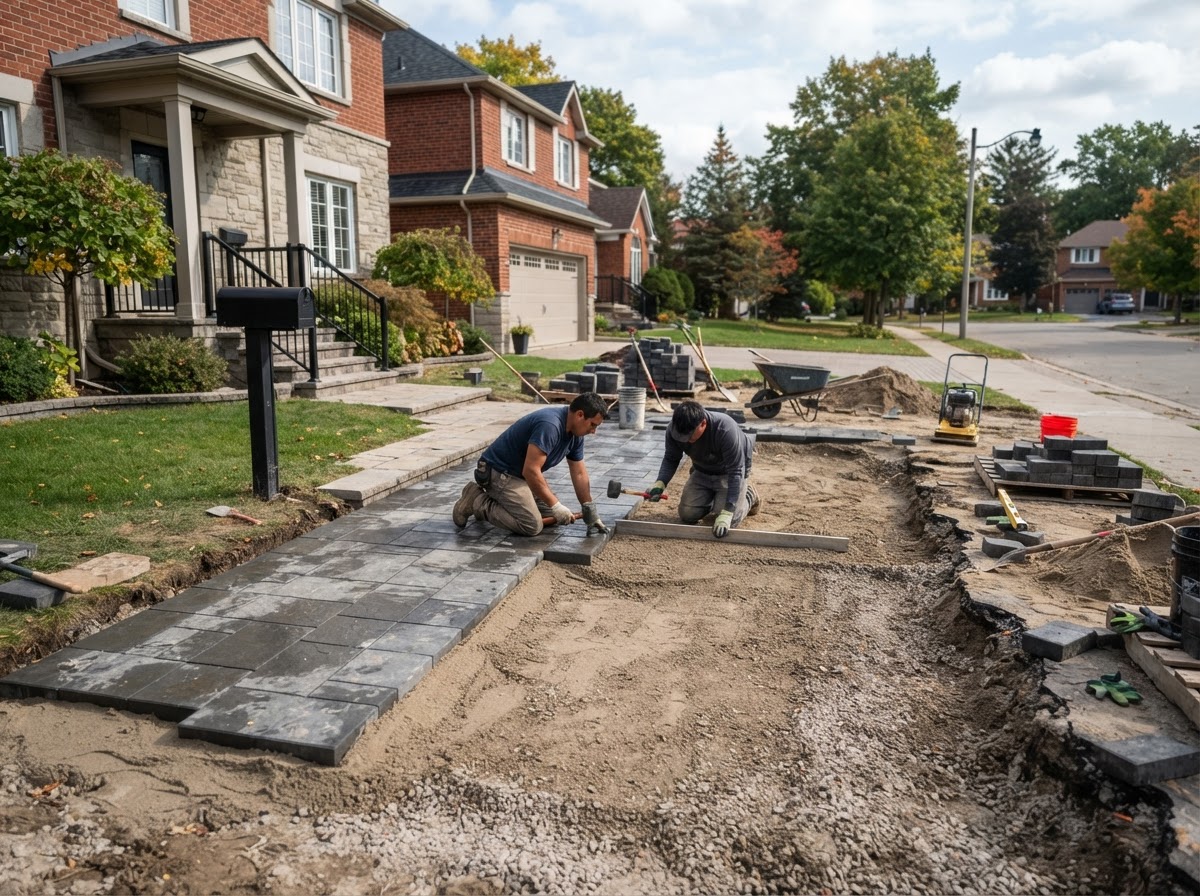
Worried About Uneven or Sinking Interlocking Pavers?
Shifting stones, uneven joints and drainage problems are worth assessing before they get worse. Northern Lakes Contracting can discuss your driveway's condition and available options.
7. How Freeze-Thaw Cycles Affect Interlock
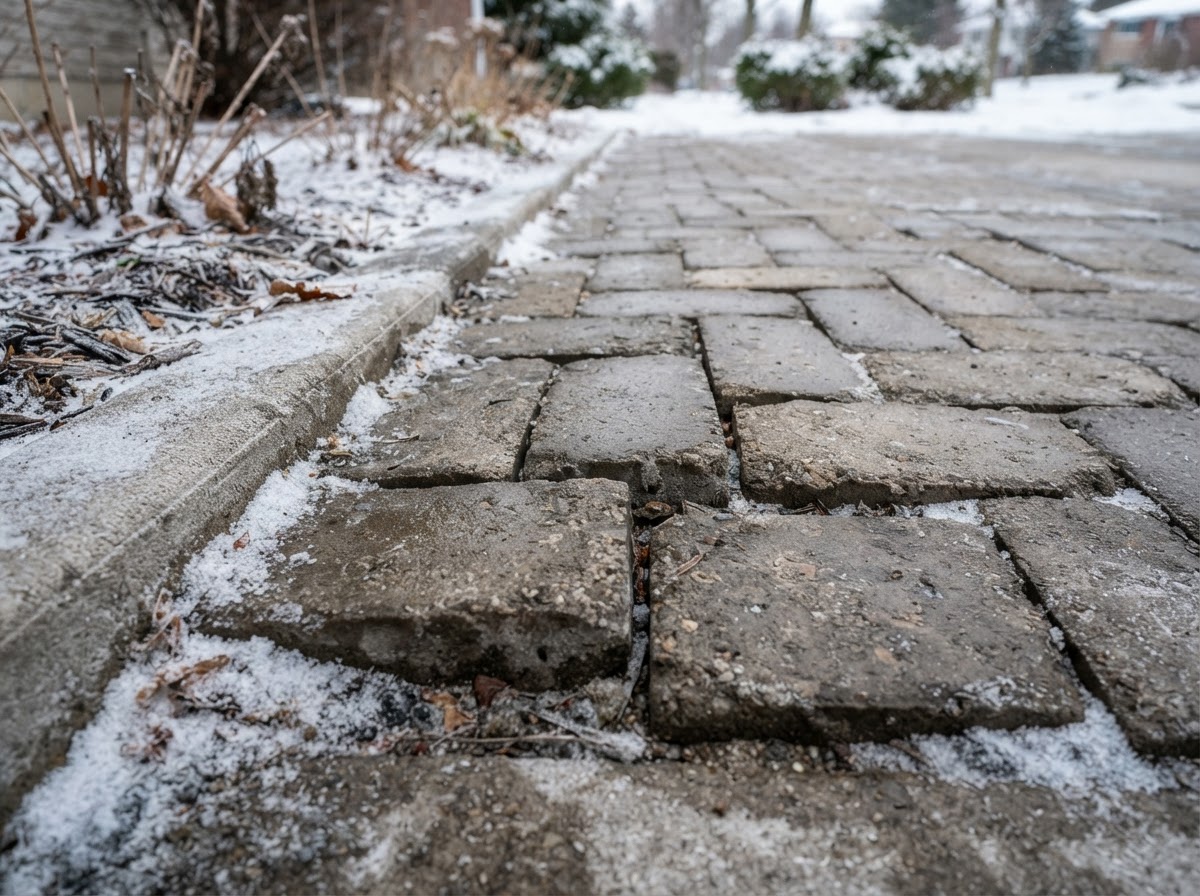
Freeze-thaw cycles occur when temperatures move above and below freezing. Water in the ground or base may freeze, expand, thaw and move. Over repeated cycles, poorly drained or weak areas can shift.
Common winter-related symptoms may include:
- Temporary movement
- Uneven pavers
- Heaving
- Settlement after thaw
- Joint material loss
- Edge movement
Good drainage helps reduce the amount of water sitting where it can cause trouble. That is why grading and drainage should always be considered when installing or repairing interlocking surfaces. For Simcoe County properties, this is especially relevant because winter temperatures can fluctuate significantly throughout the season.
8. Snow Removal on Interlocking Driveways
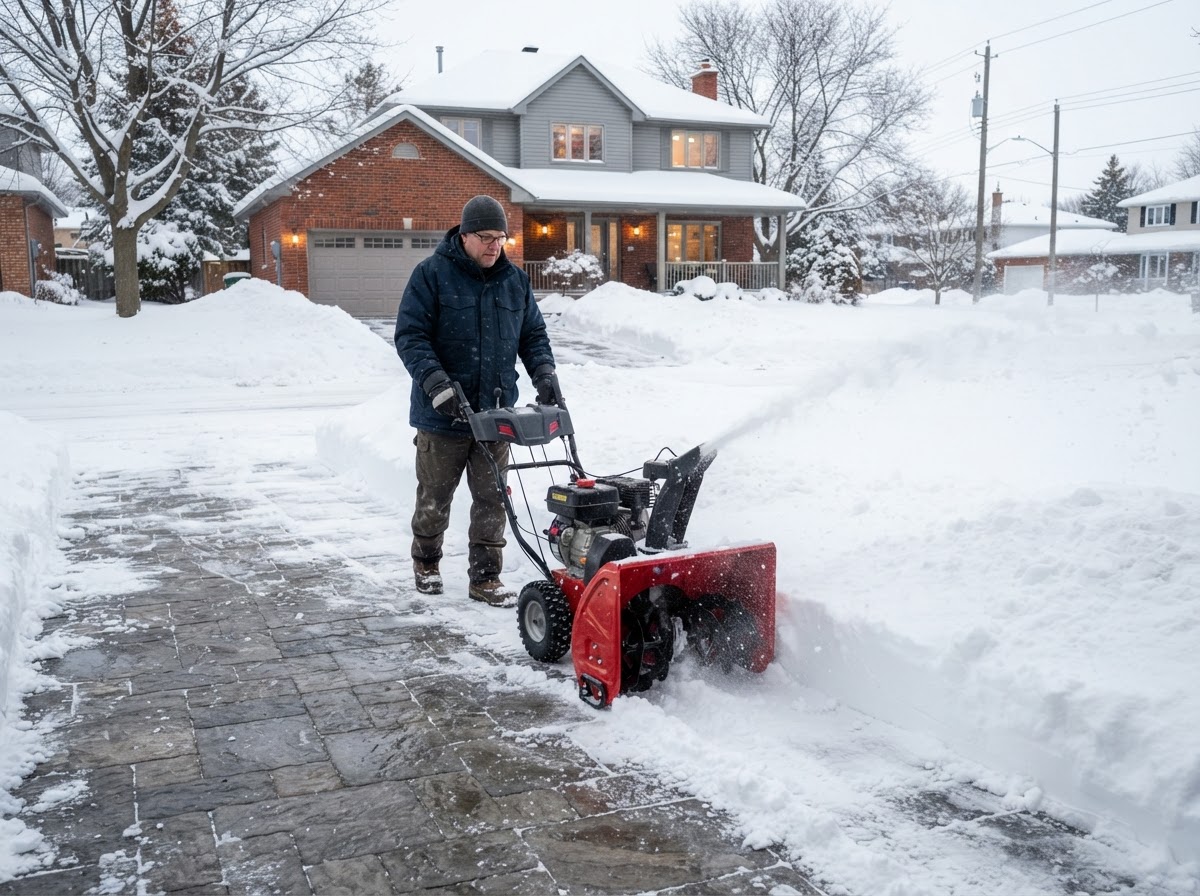
Interlocking driveways can be cleared with normal winter equipment, but care is still important. Homeowners should pay attention to:
- Loose edge pavers
- Raised sections
- Steps
- Borders
- Landscape lights
- Transition areas
- Decorative inlays
A snow shovel or snowblower is generally less likely to cause surface damage than equipment that repeatedly catches raised edges. For plowed driveways, clearly identifying driveway boundaries, curbs, steps and decorative borders can make winter clearing easier.
If one paver is already sitting higher than the others, winter equipment may catch it. That is another reason to repair obvious uneven areas before snow season if possible. For commercial properties, professional snow and ice management helps protect hardscape surfaces.
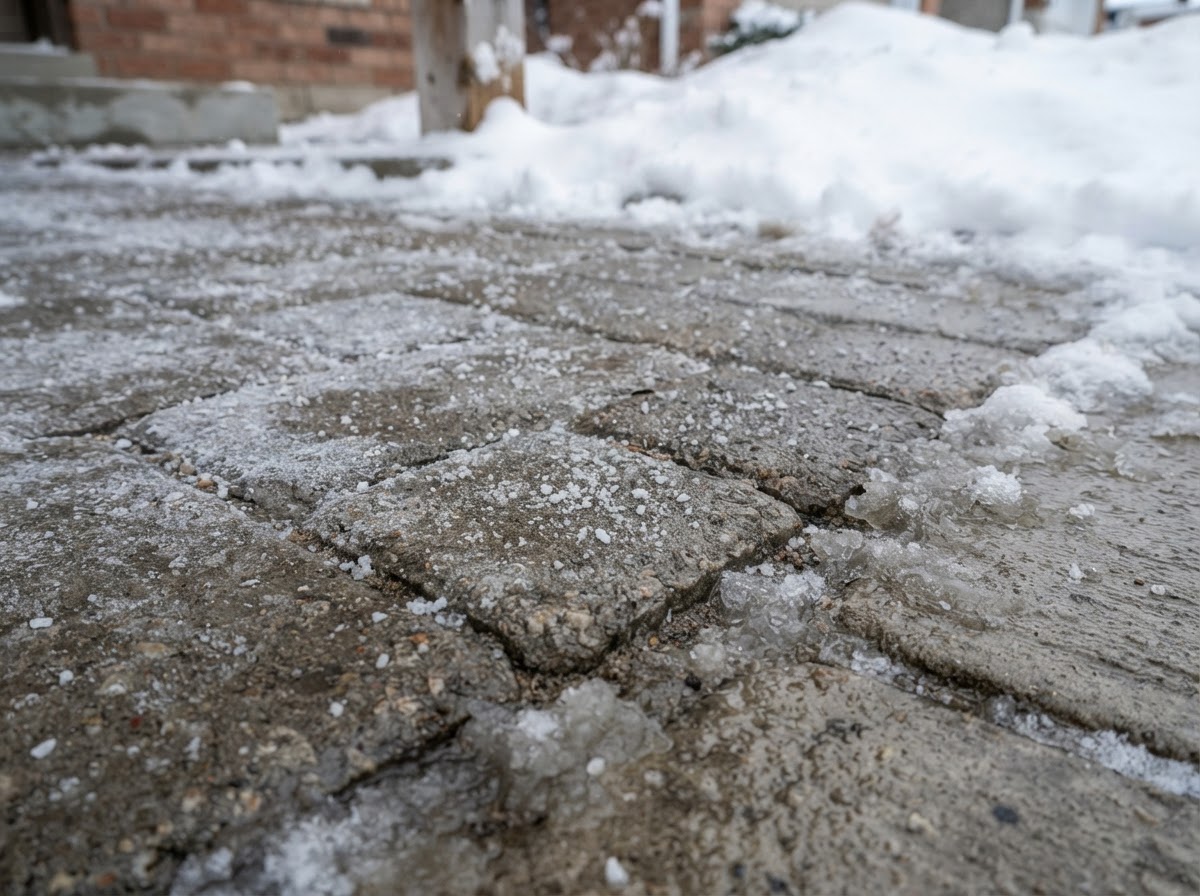
9. Salt, De-Icers and Paver Surfaces
De-icing products can help manage winter safety, but excessive or inappropriate use can affect outdoor surfaces over time. The best product depends on:
- Temperature
- Surface type
- Surrounding landscaping
- Manufacturer recommendations
- How much ice is present
Rather than applying large amounts of de-icer automatically, use only what is appropriate for the conditions. It is also worth remembering that salt can be carried onto the driveway from roads by vehicles even if you do not apply it directly.
In spring, washing away accumulated residue may help keep the surface cleaner. If your pavers have specific manufacturer care instructions, follow those recommendations.
Plan Ahead for a Better-Performing Driveway
The right preparation, drainage considerations and surface maintenance can help reduce preventable winter-related problems.
10. Protect Steps, Borders and Walkways
The main driveway is not the only area that should be inspected. Also check:
- Front steps
- Walkway transitions
- Landing areas
- Borders
- Garage aprons
- Patio connections
- Side paths
Small elevation differences can become more noticeable when snow and ice cover the surface. If a step or walkway edge is already uneven, winter may make the area harder to navigate. Fall is a good time to identify those spots. Our deck and fence installation team can also inspect exterior steps and railings.
11. Drainage Around the Driveway
Good driveway drainage includes more than the driveway surface itself. Look at the surrounding property. Ask:
- Where does water go after it leaves the driveway?
- Does runoff enter a garden bed?
- Is water collecting beside the garage?
- Does the driveway slope toward the house?
- Are nearby ditches or swales clear?
- Is snow usually piled where spring melt will drain properly?
A driveway can be properly sloped and still experience problems if the surrounding property has nowhere for the runoff to go. On rural and larger Simcoe County properties, drainage may also involve ditches, culverts, long driveways, roadside runoff and natural slopes.
Driveway drainage should work with the broader property grading. Learn more about yard grading and drainage solutions to protect your entire property.
12. When Should Interlocking Be Repaired?
Not every small imperfection needs immediate work. You may want to consider repairs if you notice:
- Repeated standing water
- Significant settlement
- Loose edge pavers
- Wide spreading joints
- Trip hazards
- Pavers rocking underfoot
- Erosion beside the driveway
- Movement near steps or garage entrances
- Drainage flowing toward structures
Some repairs may involve lifting and resetting a localized section. Others may require correcting the base or drainage first. The correct approach depends on why the movement occurred. Northern Lakes Contracting provides interlocking driveway, patio and walkway services for properties in Simcoe County and surrounding communities. Explore our patios, walkways and driveways services for more information.
13. What to Check Again in Spring
Winter is a useful test of how an interlocking driveway performs. Once the snow melts, inspect the same areas you checked in the fall. Look for changes in:
- Elevation
- Joint material
- Edge position
- Drainage
- Paver alignment
- Settlement
- Surface condition
Photographs from fall can make comparison easier. Spring is also a good time to identify whether minor maintenance is enough, individual areas need resetting, drainage needs improvement, or a larger driveway upgrade should be planned. Read our spring cleanup checklist for seasonal property maintenance tips.
Planning an Interlocking Driveway Project in Simcoe County?
Explore driveway options, materials and site preparation considerations with Northern Lakes Contracting.
Interlocking Driveway Winter Preparation Checklist
Before the first significant snowfall, check these areas of your interlocking driveway:
Surface
Remove leaves and debris, look for low spots, check for uneven pavers, and watch for standing water.
Joints
Look for significant joint-material loss, check for wide gaps, and note loose pavers.
Edges
Inspect border pavers, look for outward movement, and check landscaped edges for erosion.
Drainage
Confirm water drains away, clear nearby swales or drainage routes, check garage and walkway transitions, and plan snow-storage areas.
Winter Access
Mark steps or difficult edges if needed, remove obstacles near snow-clearing routes, and check landscape lights near driveway edges.
Spring Review
Take photos in fall, compare paver alignment in spring, and plan any necessary resets or drainage improvements.
A well-maintained interlocking driveway can handle Ontario winters effectively when the base, drainage, edge support and joint material are all in good condition.
Frequently Asked Questions About Interlocking Driveways in Simcoe County
Protect Your Interlocking Driveway Before Winter
The best winter preparation is not complicated. Keep the surface clean, pay attention to drainage, inspect joints and edges, and deal with obvious settlement before snow and ice make the problem harder to see. Northern Lakes Contracting provides interlocking driveway repair and maintenance services in Simcoe County and surrounding communities.