
Why Most Retaining Walls Fail in Ontario (And How to Build Them to Last)
Table of Contents
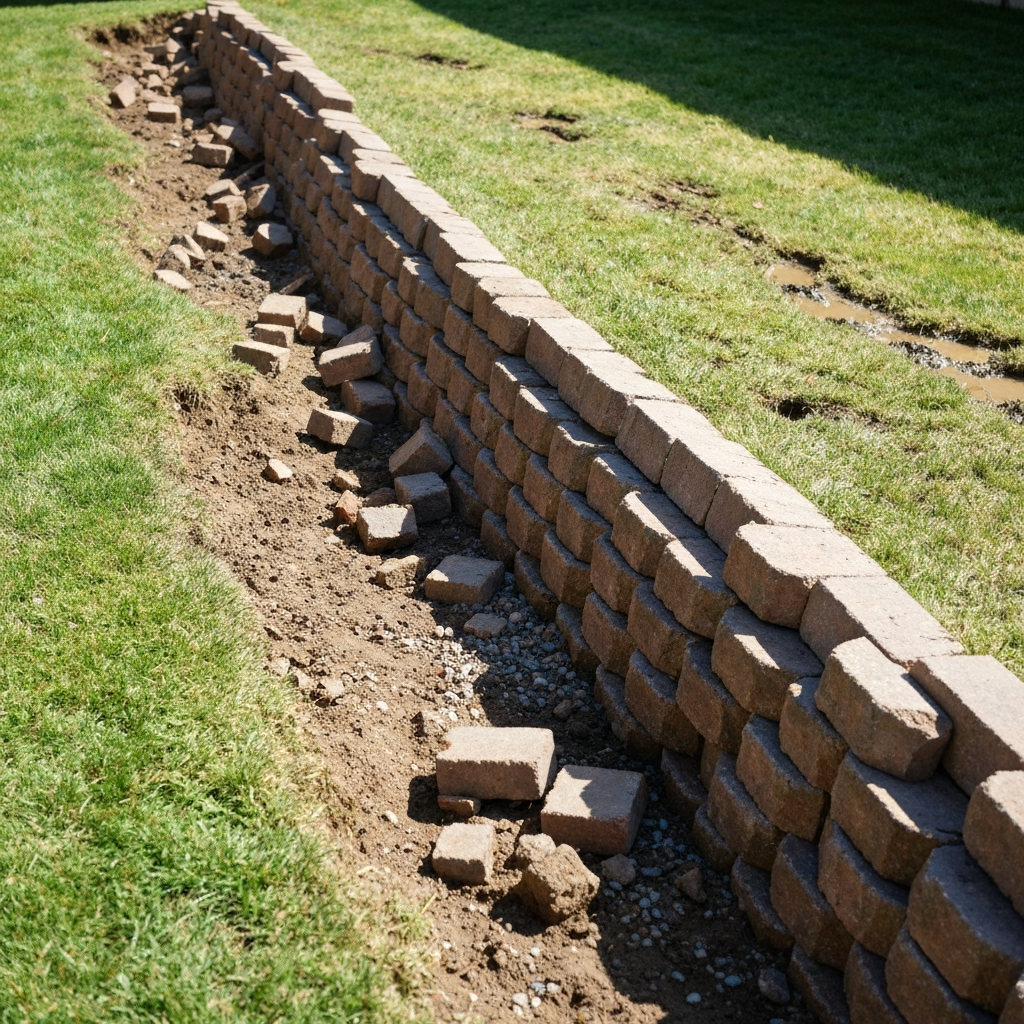
Take a drive through Orillia, Simcoe County, or Muskoka, and you will inevitably see them: retaining walls leaning forward, bulging in the middle, or completely collapsed. It's an incredibly common sight in Ontario, and it almost always comes down to the same fatal flaws in construction.
A retaining wall is not just a stack of heavy stones. It is an engineered structure designed to hold back tons of soil and water. When you combine that immense weight with Ontario's brutal freeze-thaw cycles, a poorly built wall doesn't stand a chance.
If you are planning to invest in a retaining wall for your property, understanding why they fail is the first step to ensuring yours lasts a lifetime.
1. The Enemy: Hydrostatic Pressure
The number one reason retaining walls fail is poor drainage. When water gets trapped in the soil behind a wall, it creates immense weight known as hydrostatic pressure. Water weighs about 62.4 pounds per cubic foot. If the water has nowhere to go, it will simply push the wall over.
Proper construction requires a drainage zone of clear gravel directly behind the wall, wrapped in filter fabric to prevent soil from clogging it. A perforated weeping tile pipe must be installed at the base to carry water away from the structure.
2. Surviving Ontario's Freeze-Thaw Cycles
In Ontario, water trapped behind a wall doesn't just push—it freezes. When water turns to ice, it expands by about 9%. This frost heave acts like a hydraulic jack, pushing the stones outward. Over a few winters, this cycle will destroy the structural integrity of the wall.
This is why that drainage layer is so critical in our climate. By ensuring water drains away quickly, there is nothing left behind the wall to freeze and expand.
Is Your Retaining Wall Failing?
Don't wait for a complete collapse. Contact us for a professional assessment and engineered replacement built to last.
2. Improper Base Preparation
A wall is only as strong as what it sits on. If a contractor simply scrapes away the grass and starts stacking blocks, the wall will sink and lean within the first year.
A proper base requires excavating down to undisturbed subsoil, laying geotextile fabric, and installing a minimum of 6 inches of highly compacted Granular 'A' gravel.
4. Choosing the Right Materials
Pressure-treated timber walls were popular in the 90s, but they rot when constantly exposed to wet soil.
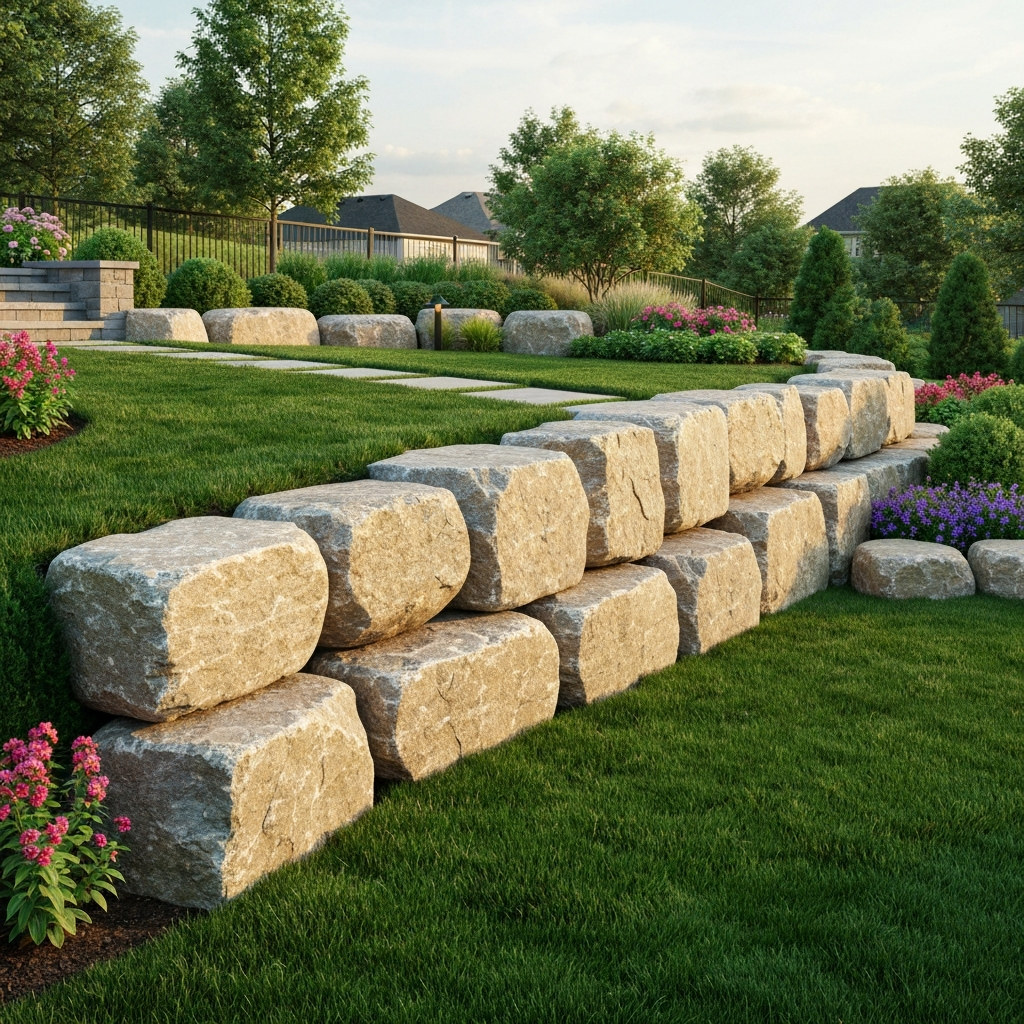
For longevity in Ontario, engineered concrete segmental blocks or natural armour stone are the only acceptable materials. Their sheer mass and density resist the pushing forces of the earth behind them.
5. The Missing Geogrid
For walls taller than 3 feet, gravity alone is not enough to hold back the earth.
Engineers require the use of geogrid—a high-tensile synthetic mesh that gets sandwiched between the blocks and buried deep into the soil behind the wall. This essentially turns the massive block of soil into a stabilized mass that holds the wall up, rather than pushing it over.
6. Wall Batter (Setback)
Retaining walls should never be built perfectly plumb (straight up and down).
They must have a "batter" or setback, meaning each course of blocks is stepped slightly back into the slope. This forces the center of gravity backward into the hill, dramatically increasing the wall's resistance to overturning forces.
7. Shallow Embedment Depth
You should never see the bottom of the first block resting on the surface of the grass.
The entire first course (and sometimes more, depending on height) must be buried below grade. This embedment prevents the base of the wall from kicking out or sliding forward under the immense pressure of the soil above.
8. Poor Soil Compaction
As the drainage gravel and soil are backfilled behind the wall, they must be mechanically compacted in 6-inch lifts.
If the soil is just dumped behind the wall loosely, it will settle dramatically over the next few rainstorms, creating a sinkhole behind your wall and destroying any patio or landscaping built on top of it.
9. Ignoring Filter Fabric
Even if a contractor installs the proper clear gravel drainage zone, it will fail within a few years if they skip the filter fabric.
Without a non-woven geotextile fabric separating the native soil from the clean gravel, fine dirt particles will wash into the gravel during every rainstorm. Eventually, the gravel clogs completely, trapping water and causing a blowout.
10. Conclusion: Build It Once, Build It Right
A retaining wall is a significant investment in your property's safety and usable space. Cutting corners on excavation, drainage, or engineering will guarantee a failure in Ontario's harsh climate. By hiring a professional hardscaping contractor who understands hydrostatic pressure and frost heave, you ensure your wall will stand strong for decades.