
Fall Landscaping Checklist for Orillia Homeowners: What to Do Before the First Frost
Fall in Orillia can change quickly. One week may still feel like late summer, and the next can bring cold rain, overnight frost, heavy leaf drop and the first signs of winter.
That makes fall one of the most important times of year to prepare your property. A proper fall cleanup is not simply about making the yard look tidy. It is also an opportunity to protect lawns, improve drainage, reduce winter damage, prepare walkways and outdoor areas, and identify problems that may become more difficult to deal with once the ground freezes.
For homeowners in Orillia and surrounding areas, the best fall property-maintenance plan focuses on both appearance and preparation. This checklist explains what to look at before winter arrives, including yard grading and drainage, interlocking patios and walkways, and planning for snow removal access.
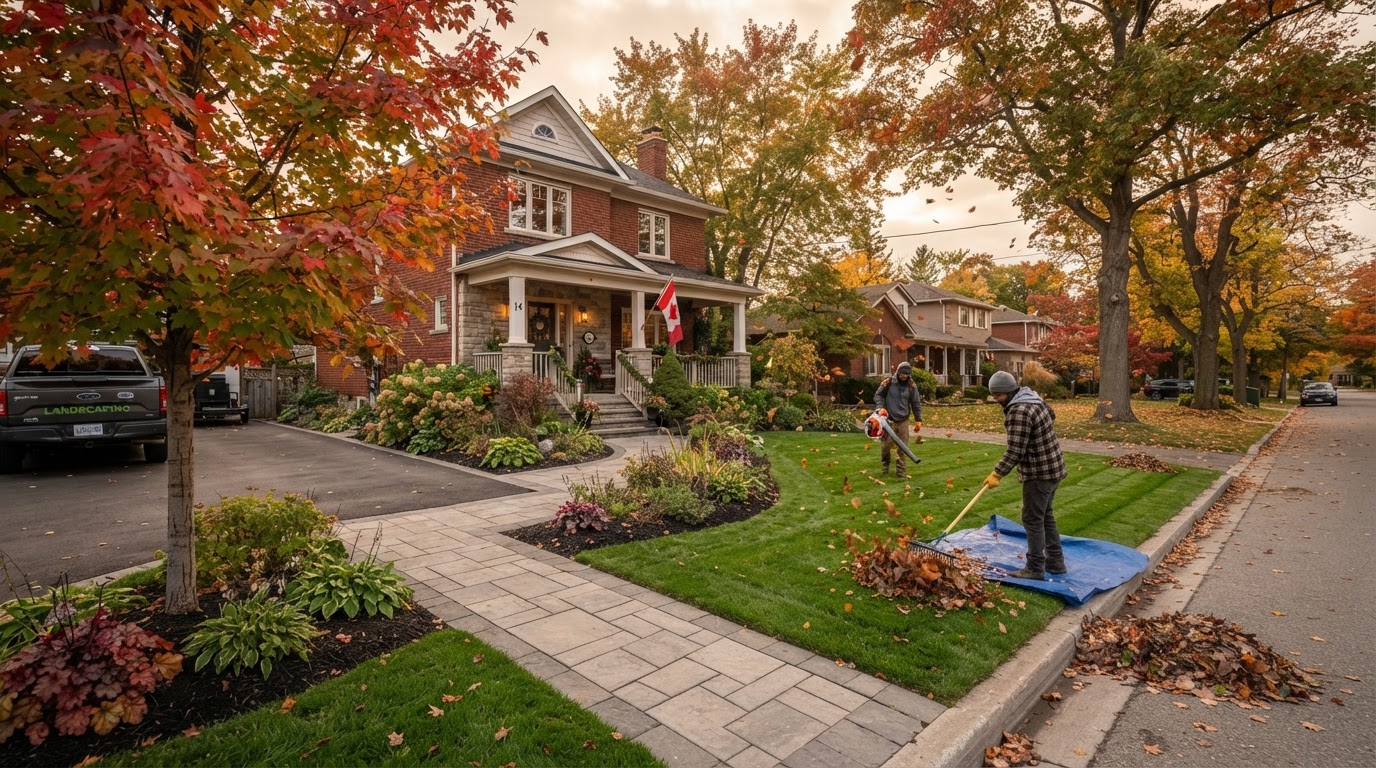
1. Why Fall Property Maintenance Matters in Orillia
Orillia properties experience a full range of Ontario weather conditions throughout the year. Fall brings heavy leaf accumulation, colder overnight temperatures, increased rainfall, wet soil conditions, shorter daylight hours, early frost, changing drainage patterns, and preparation for snow and ice.
Ignoring small problems in the fall can make them more noticeable in spring. For example, a low area in the lawn that holds water in October may become an ice-prone area in winter and a muddy section during spring thaw. A blocked drainage path may cause runoff to collect where it should not. Loose pavers, damaged steps or uneven walkways can also become more difficult to use safely once snow and ice arrive.
Fall maintenance gives homeowners a chance to deal with these issues before winter limits what can be done. A coordinated property maintenance plan addresses both appearance and long-term protection.
2. Remove Heavy Leaf Buildup
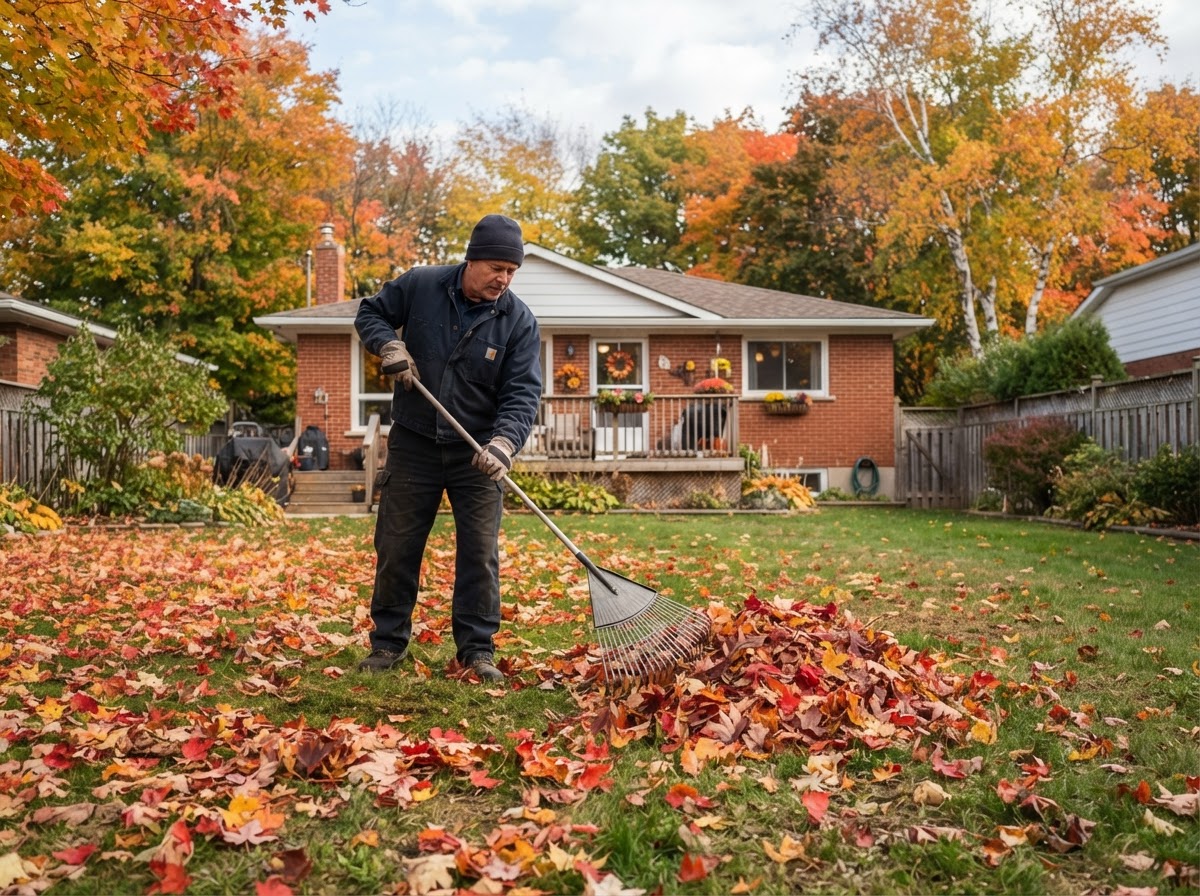
Leaf cleanup is usually the most visible part of fall yard maintenance. A small amount of shredded leaf material can sometimes break down naturally, but thick layers of wet leaves can create problems for lawns and garden areas.
Heavy leaf buildup can:
- Block sunlight from reaching the grass
- Trap moisture and flatten turf
- Create slippery surfaces
- Collect around walkways and steps
- Clog drainage areas
- Make spring cleanup more difficult
Properties with mature trees may require more than one cleanup during the fall. Instead of waiting until every leaf has dropped, it often makes sense to remove leaves in stages. This is especially useful on larger Orillia properties or yards surrounded by mature maple, oak and other deciduous trees.
Areas that should receive extra attention:
- Lawn edges
- Garden beds
- Patios and walkways
- Driveway edges
- Drainage swales
- Window wells
- Stairs and deck surfaces
- Fence lines
Leaves can easily collect in corners and low spots where they trap moisture, which is exactly why a thorough fall yard cleanup protects your lawn through winter.
3. Clean and Prepare Garden Beds
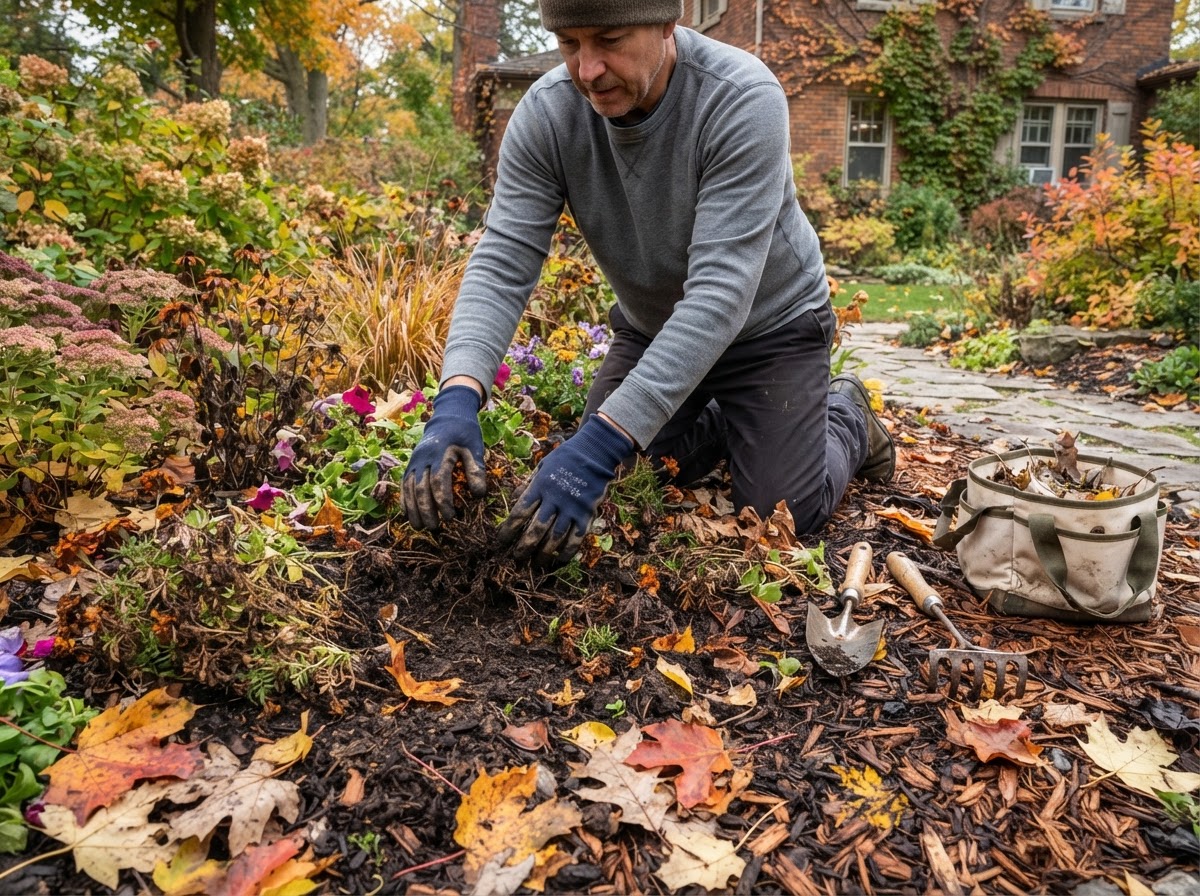
Fall is a good time to reset garden beds before winter. This does not mean every plant needs to be cut down. Some plants can remain standing through winter for visual interest or habitat, while damaged, diseased or unwanted growth may be better removed.
A typical fall garden-bed cleanup may include:
- Removing annual plants
- Removing excessive leaf buildup
- Cutting back selected perennials
- Removing weeds
- Redefining bed edges
- Checking mulch depth
- Removing broken branches
- Cleaning decorative stone areas
- Checking drainage around beds
The goal is to leave the bed clean and manageable without stripping away everything unnecessarily. A well-prepared garden bed is also easier to work with when spring arrives, and pairs well with broader landscaping and outdoor living improvements.
4. Give the Lawn a Final Cut
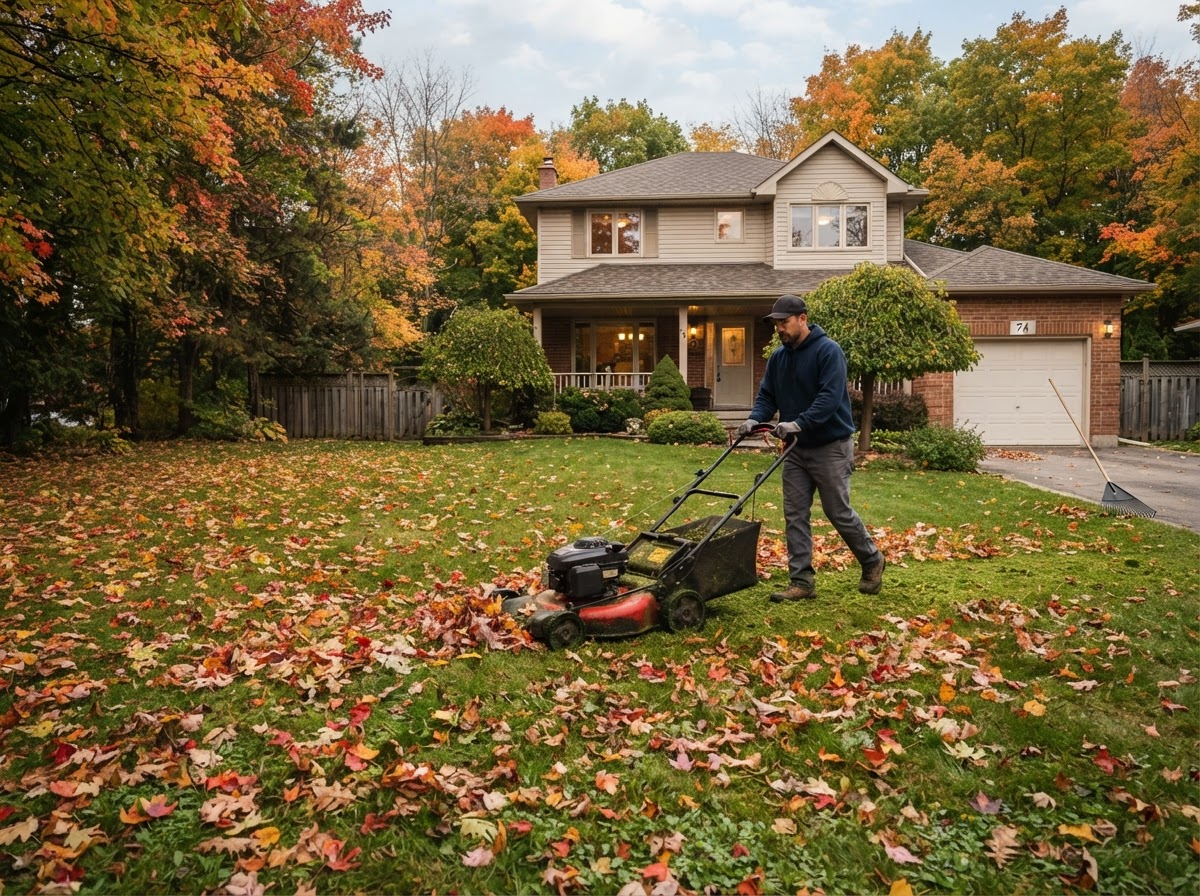
One of the most common fall landscaping questions is: how short should grass be before winter? The answer depends on the type of lawn and current growing conditions, but the main objective is to avoid leaving the grass excessively long going into winter. Very long grass can become flattened by snow and moisture. At the same time, cutting the lawn extremely short can unnecessarily stress the turf.
The last few cuts of the season should focus on leaving the lawn neat, evenly trimmed and free of heavy debris. This is also a good opportunity to inspect the lawn for:
- Bare areas
- Compacted soil
- Standing water
- Damaged edges
- Erosion
- Uneven grading
- Areas damaged by summer traffic
Those observations can help determine whether repairs should be completed immediately or planned for spring.
Need Help Getting Your Yard Ready for Winter?
Fall cleanup can involve more than removing leaves. Northern Lakes Contracting can help you discuss the outdoor maintenance your property may need before colder weather arrives.
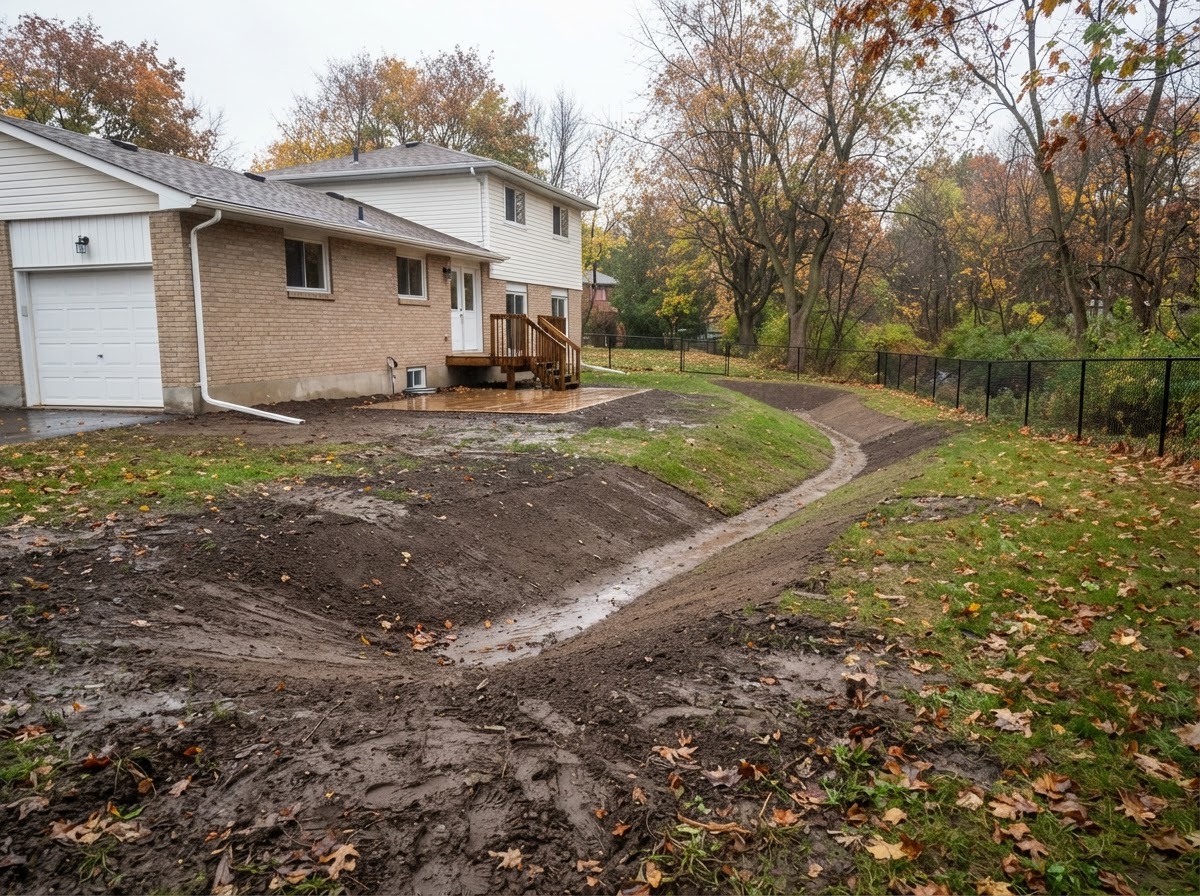
5. Check Yard Grading and Drainage
This is one of the most important parts of fall property preparation. Water should move away from buildings and outdoor living areas rather than collect in low spots. Look around your property after a period of rain and pay attention to:
- Standing water
- Soggy lawn areas
- Water collecting beside patios
- Runoff crossing walkways
- Erosion near slopes
- Pooling near the foundation
- Washed-out garden beds
- Low areas beside driveways
- Blocked drainage routes
If you regularly see water collecting in the same location, the issue may involve grading or drainage rather than simply heavy rain. Depending on the property, potential solutions may include correcting surface grading, redirecting runoff, improving drainage paths, adding drainage stone, rebuilding affected lawn areas, improving slope away from structures, and addressing low spots.
Northern Lakes Contracting provides yard grading and drainage services for homeowners dealing with standing water, poor slopes and drainage-related landscaping problems. For more on why this matters, read our guide on how yard grading affects your foundation.
6. Inspect Patios, Walkways and Interlocking
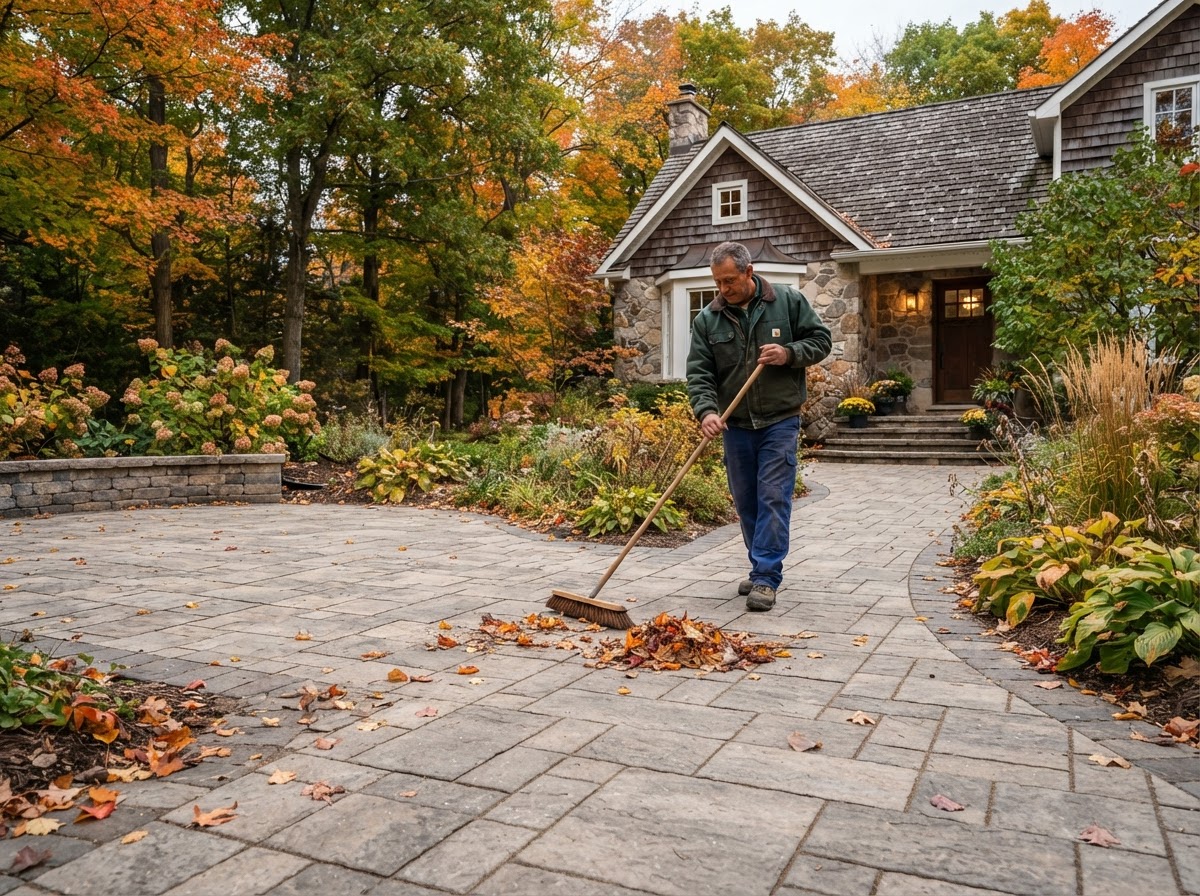
Fall is also a good time to inspect hardscaped areas before winter. Walk around your interlocking patios, front walkways, driveway edges, steps, retaining areas and pathways.
Look for:
- Movement or settling
- Uneven edges
- Low spots
- Loose sections
- Washed-out joint material
- Areas holding water
Small changes in elevation can become more noticeable during winter because water may freeze in low areas. A well-built patio or walkway should manage water effectively and provide a stable surface through changing seasons. If an area is already shifting or settling before winter, it is worth documenting it so repairs can be planned. Learn more about patios, walkways and driveways and how proper base preparation prevents freeze-thaw damage.
7. Prepare Outdoor Living Areas
Backyards often contain more than lawn and gardens. Orillia homeowners may also have patios, decks, pergolas, fire pit areas, outdoor furniture, planters, landscape lighting and storage areas. Fall preparation may include moving or covering seasonal furniture, removing debris from patios, checking lighting, cleaning surfaces and making sure water is not collecting around outdoor structures.
This is also a useful time to think ahead. If your backyard does not function the way you want, winter can be a good time to begin planning next year's improvements. Projects such as interlocking patios, fire pit areas, decks, pergolas, garden beds, lighting, grading and drainage can often be planned well before spring construction begins.
Explore our outdoor living services to start planning your spring project now.
8. Check Decks, Fences and Steps
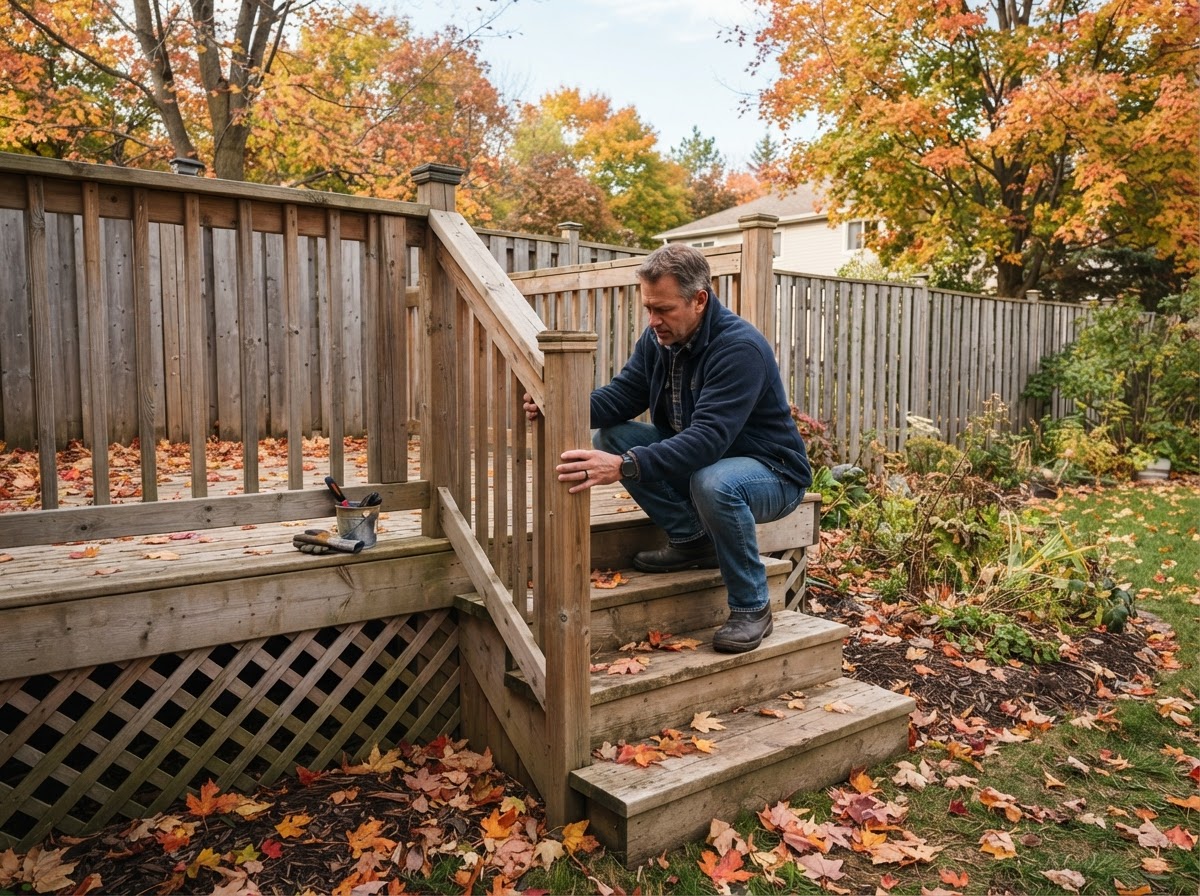
Fall is a practical time to inspect exterior wood and structural features. Look for loose boards, damaged railings, shifting steps, damaged fence sections, protruding fasteners, areas that feel unstable, rotting or deteriorated material, and sections damaged during the summer.
Some repairs may be minor. Others may indicate that a larger repair or replacement should be planned. Dealing with obvious safety or access issues before snow arrives can make winter use easier. For a detailed assessment framework, see our guide on deck and fence maintenance in Orillia, or visit our deck and fence installation page.
9. Plan for Snow Removal Access
Fall landscaping and winter planning should work together. Before the first major snowfall, think about how snow will be removed from the property. Ask:
- Where will snow be piled?
- Are driveway edges clearly defined?
- Are walkways easy to access?
- Are there low landscape lights near plowing areas?
- Are decorative stones or garden borders close to the driveway?
- Are steps and pathways clearly visible?
- Are drainage areas likely to be blocked by snow piles?
Planning ahead can help reduce accidental damage and avoid creating drainage issues when snow begins to melt. For larger residential and commercial properties, snow-storage locations should be considered before winter starts. Learn more about our snow and ice management services.
10. Clean Up High-Traffic Areas
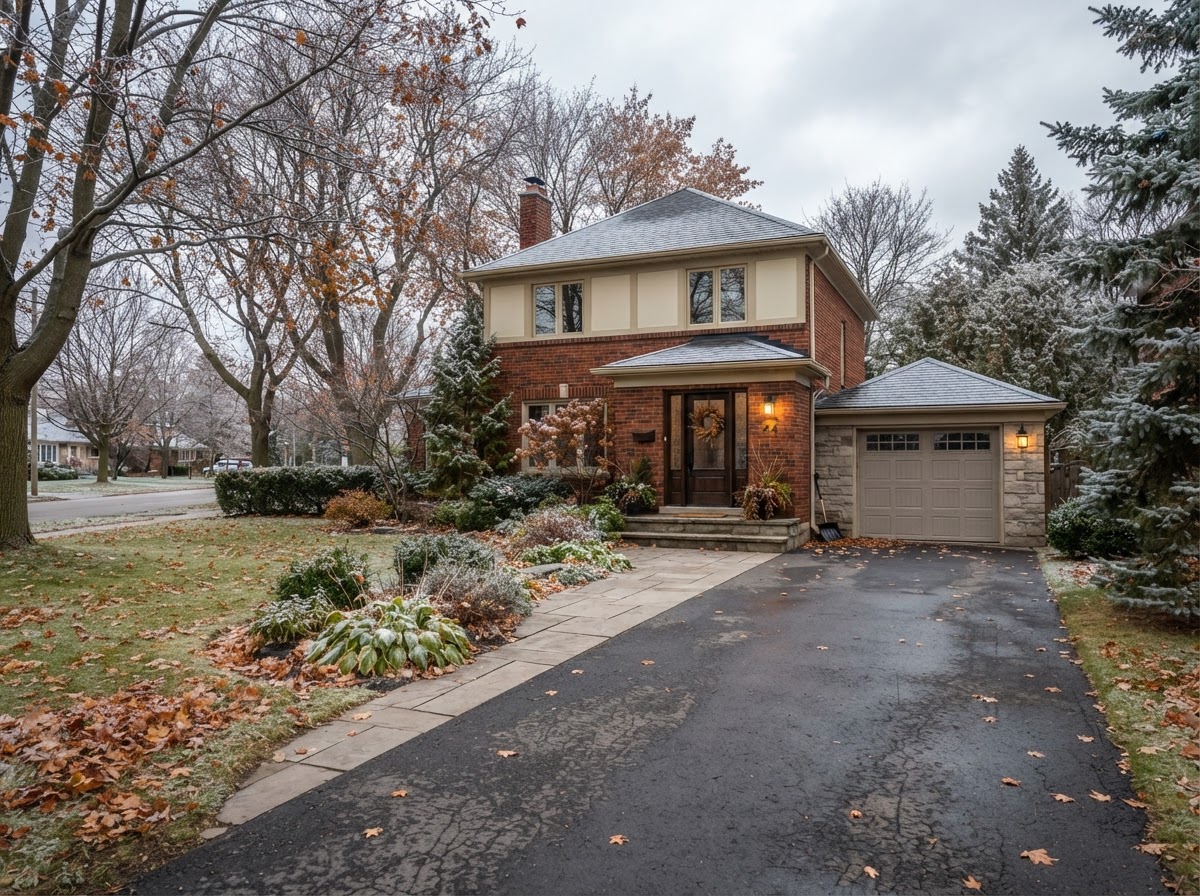
Some areas of a property experience more wear than others. These usually include front entrances, side gates, driveways, steps, pathways, garbage-storage areas, garage entrances and parking areas. Fall is a good time to remove debris, trim back overgrown vegetation and make sure these spaces are easy to use.
Improving visibility and access before winter can also make snow clearing easier and safer throughout the season.
11. Fix Small Property Repairs Before Winter
Not every fall property-maintenance task is landscaping. Exterior wear and tear often becomes more noticeable at the end of the season. Depending on the property, fall may be a good time to address:
- Damaged drywall in garages or utility areas
- Loose trim
- Minor framing repairs
- Fence damage
- Damaged steps
- Small exterior repairs
- Loose hardware
- Damaged gates
Handling smaller repairs before winter may prevent them from becoming more inconvenient later. Northern Lakes Contracting also provides general property maintenance and drywall and framing repairs alongside landscaping and seasonal property care.
12. When to Book a Professional Fall Cleanup in Orillia
The best time depends on your property. Homeowners with very few trees may only need one final cleanup. Properties with mature trees may benefit from more than one visit. You may want professional help if:
- The property is large
- Leaf volume is heavy
- Drainage areas need attention
- Garden beds require significant cleanup
- You have multiple outdoor areas to prepare
- You need repairs completed before winter
- You want landscaping and property maintenance coordinated together
The earlier fall work is planned, the easier it is to deal with weather changes before the ground freezes. A professional property maintenance contractor can coordinate cleanup, grading, drainage and repairs in a single visit.
Notice Problems With Your Patio or Walkways?
Uneven pavers, drainage concerns and worn outdoor surfaces are worth assessing before winter conditions make access and maintenance more difficult.
Fall Landscaping Checklist for Orillia Homeowners
Before winter arrives, review these areas:
Lawn
- Remove heavy leaf buildup
- Complete final mowing
- Identify damaged or bare areas
- Check for standing water
Garden Beds
- Remove unwanted plant material
- Remove excessive leaves
- Weed beds
- Check mulch and borders
Drainage
- Look for pooling water
- Check low spots
- Keep drainage paths clear
- Inspect runoff after rainfall
Hardscaping
- Inspect patios
- Check walkways
- Check steps
- Watch for settlement or low spots
Outdoor Living
- Clean patios
- Store seasonal furniture
- Check decks and pergolas
- Inspect landscape lighting
Winter Preparation
- Plan snow-storage locations
- Keep driveway edges visible
- Clear access routes
- Address small repairs before snowfall
Prepare Your Orillia Property for the Next Season
From landscape cleanup to outdoor surface maintenance, planning ahead can help homeowners prioritize work that matters most for their property.