
Why Fall Yard Cleanups Are Crucial for Spring Growth
As the vibrant autumn leaves fall across Simcoe County and Muskoka, many homeowners are tempted to simply pack away the mower, close the cottage, and let nature take its course until spring. This is a massive mistake.
A proper fall cleanup is not just about aesthetics; it is a critical horticultural necessity. How you prepare your lawn and garden beds in October and November will directly dictate how healthy, green, and vibrant they will be when the snow melts in April.
In this guide, we explain the science behind fall property maintenance and why skipping this essential step can lead to costly lawn repairs in the spring.
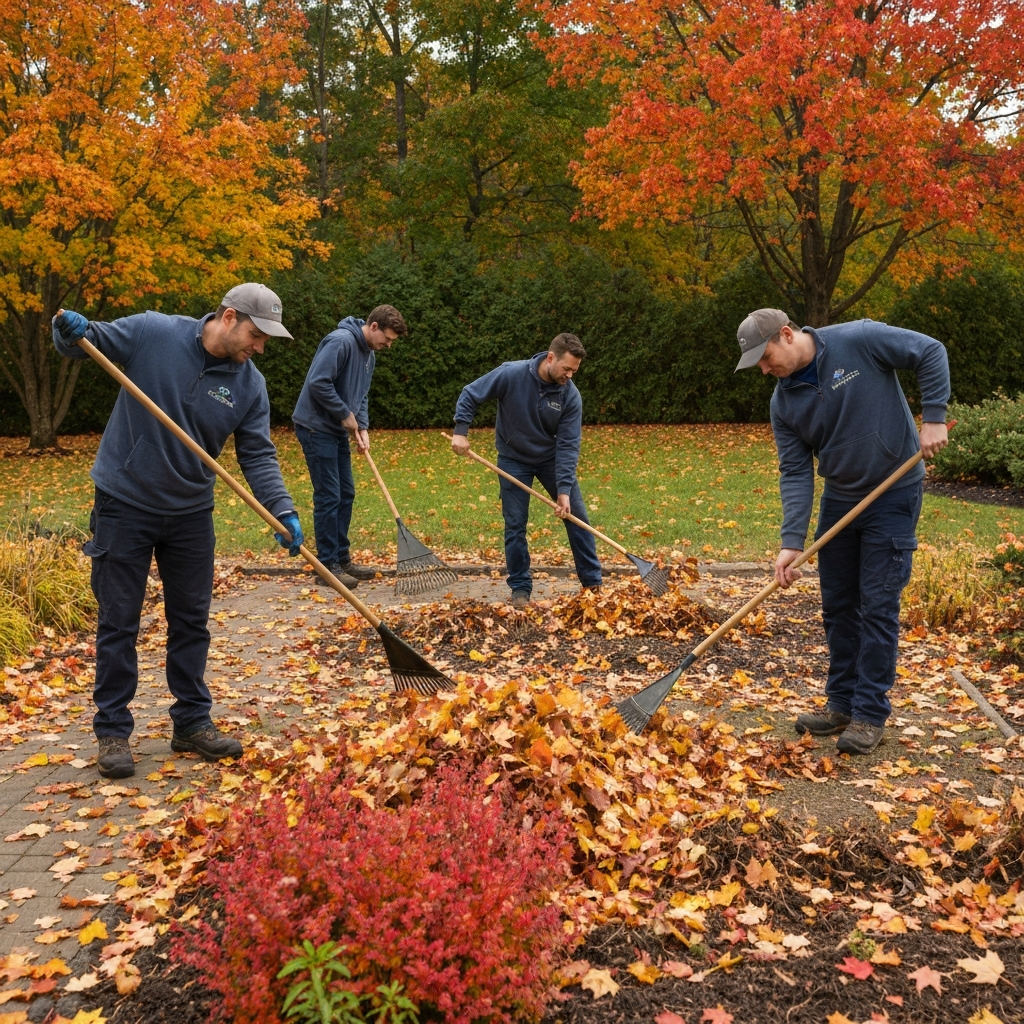
1. The Danger of Matted Leaves
The most obvious part of a fall cleanup is leaf removal, but many people don't understand why it's so important.
When a thick layer of leaves is left on the grass over the winter, the heavy Ontario snow compresses them into a dense, impenetrable mat. This mat blocks sunlight and prevents oxygen from reaching the turf. Worse, it traps moisture directly against the grass blades.
This dark, wet, oxygen-deprived environment is the perfect breeding ground for Snow Mold, a fungal disease that will completely kill large patches of your lawn. When the snow melts, you will be left with dead, pinkish-grey circles of rotting grass that require extensive dethatching and overseeding to repair.
2. Aeration: Letting the Soil Breathe
Throughout the summer, your lawn endures a lot of foot traffic. Whether it's kids playing, dogs running, or simply the weight of the lawnmower, the soil in Orillia and Simcoe County (which often has a high clay content) becomes heavily compacted.
Compacted soil prevents water, oxygen, and nutrients from reaching the root zone. Fall is the ideal time for core aeration. By mechanically pulling small plugs of soil out of the lawn, you relieve the compaction. This allows the root system to expand and absorb the nutrients it needs to survive the harsh winter.
3. Fall Fertilization: Winterizing the Roots
While spring fertilizer is designed to promote rapid top-growth (making the grass green and tall), fall fertilizer serves a completely different purpose.
A high-quality winterizing fertilizer is rich in potassium. Potassium acts like antifreeze for the grass plants, strengthening the cellular walls and promoting deep root growth. While the top of the grass goes dormant, the roots continue to grow until the ground freezes solid. Feeding the roots in the fall guarantees a thicker, healthier lawn that will green up much faster in the spring.
4. Preparing Garden Beds
Your lawn isn't the only thing that needs attention. Garden bed maintenance in the fall is essential for a clean, vibrant display next year.
- Perennial Cutback: Dead foliage should be cut back to prevent pests and diseases from overwintering in the plant debris.
- Shrub Pruning: Fall is the time to lightly prune certain shrubs to maintain their shape and prevent heavy snow loads from snapping weak branches.
- Mulching: Applying a fresh layer of mulch in the late fall acts as an insulating blanket for the root systems of your delicate plants, protecting them from the extreme freeze-thaw cycles.
Overwhelmed by Fall Maintenance?
Don't spend your weekends raking leaves and hauling debris. Let our professional property maintenance team prepare your yard for the harsh Ontario winter.
5. Pruning and Trimming
Problem: Dead or dying branches are a major liability during an Ontario winter. Heavy snow and ice storms can easily snap weak limbs, causing damage to your home, vehicles, or power lines.
Agitation: Ignoring tree and shrub health in the fall means you're leaving your property vulnerable to severe winter storm damage.
Solution: Professional fall pruning removes dead wood and shapes shrubs to withstand heavy snow loads. It also encourages healthy spring growth. (Note: Avoid heavy pruning that stimulates new growth before a freeze).
6. Gutter Cleaning Importance
What happens if you don't clean your gutters in the fall? When leaves and pine needles clog your eavestroughs, water cannot drain. In freezing temperatures, this water turns to solid ice, leading to ice dams that can tear off gutters and force water under your roof shingles.
A thorough fall cleanup should always include clearing all roof drainage systems to ensure water flows freely away from your home's foundation.
7. Irrigation System Blowouts
Why is a sprinkler blowout necessary? Any water left inside underground PVC pipes will freeze and expand during the winter. This causes the pipes and sprinkler heads to shatter underground, resulting in massive repair bills in the spring.
Using a high-volume air compressor to clear all water from the lines is a non-negotiable step for any property with an automated irrigation system in Simcoe County.
8. Hardscape Inspection
Before the snow flies, it's crucial to inspect your interlocking driveways, patios, and retaining walls.
Water that seeps into cracked joints or behind failing retaining walls will freeze and expand (frost heave), causing severe structural damage. Sweeping polymeric sand into paver joints and ensuring proper drainage away from hardscapes will protect your investment through the freeze-thaw cycles.
9. Protecting Delicate Plants
How do you protect sensitive shrubs from winter wind? Young trees, delicate hydrangeas, and exposed evergreens can suffer from "winter burn" caused by harsh, drying winds.
Wrapping these plants in breathable burlap and applying a thick layer of root-insulating mulch provides a critical barrier against the extreme Ontario elements.
10. Conclusion: Pay Now or Pay Later
Property maintenance is an investment. By investing in a professional fall cleanup, you are proactively protecting your landscaping. If you ignore your property in November, you will likely spend significantly more time and money in May trying to repair dead grass, replace winter-killed shrubs, and clean up a soggy, matted mess. Let Northern Lakes Contracting handle the hard work so your property is pristine come spring.