
Deck & Fence Maintenance in Orillia: When to Repair vs Replace After Winter Damage
Ontario winters are brutal on outdoor structures. The combination of heavy snow loads, freeze-thaw cycles, ice accumulation, and moisture penetration can turn a beautiful deck or fence into a safety hazard in a single season. For homeowners in Orillia and Simcoe County, knowing when to repair versus when to replace is critical for both safety and budget.
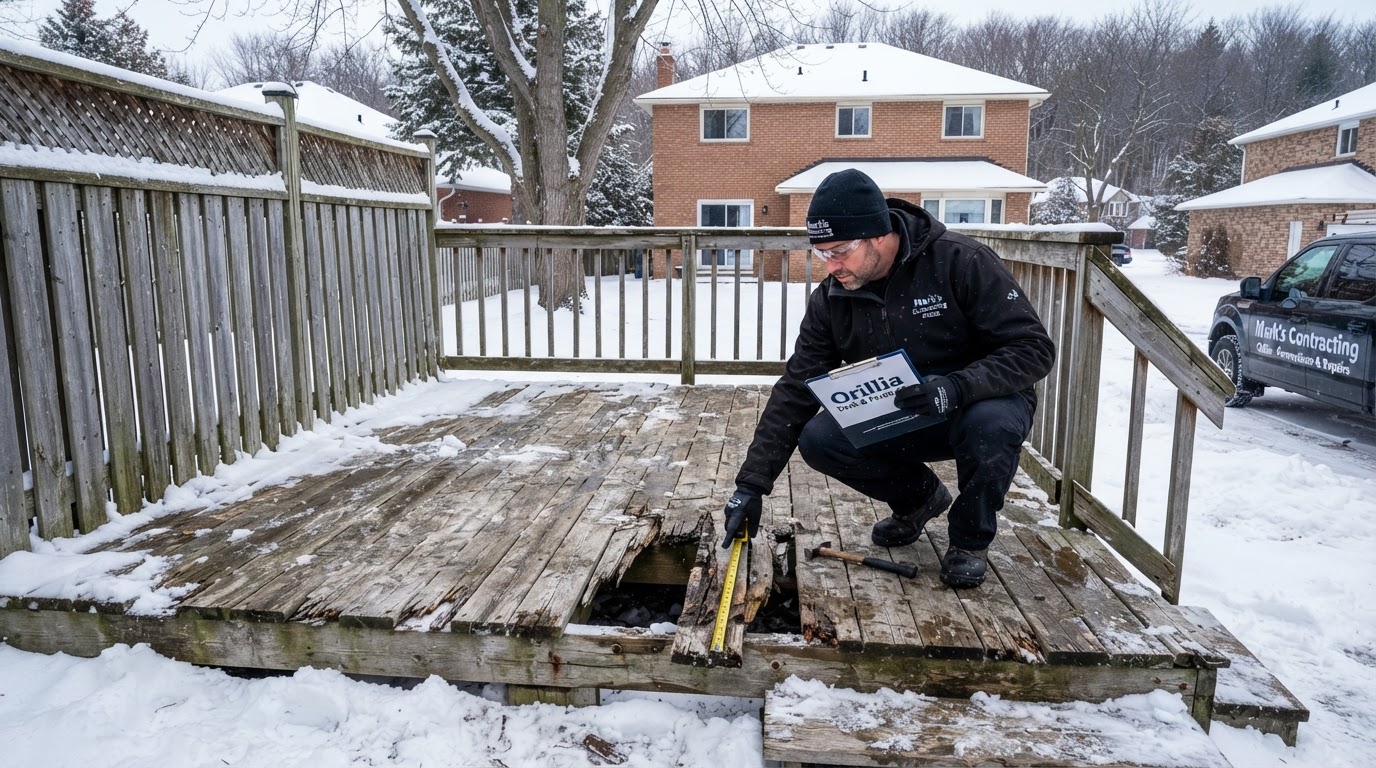
A damaged deck isn't just an eyesore—it's a serious safety risk. Rotting boards can give way underfoot, loose railings can fail when leaned against, and shifting posts can cause structural collapse. Similarly, a damaged fence can blow down in a storm, damaging property and creating liability.
In this guide, we'll walk you through exactly how to assess winter damage to your deck and fence, when repair makes sense, when replacement is the smarter investment, and how to protect your structures for the long term.
1. How Ontario Winters Damage Decks and Fences
Understanding how winter damages your outdoor structures is the first step in knowing what to look for during your spring inspection.
- Freeze-thaw cycles: Moisture penetrates wood fibers, freezes, expands, and creates micro-cracks that worsen with each cycle
- Snow load: Heavy, wet Ontario snow can exceed 40 lbs per square foot, stressing deck joists and fence posts
- Ice dams: Ice buildup at the deck-house junction can force water under flashing and into your home
- Ground heave: Frost pushes fence posts upward, loosening them and creating gaps
- UV degradation: Even in winter, UV rays break down wood finishes, leaving wood exposed to moisture
The cumulative effect of these factors means that even a well-maintained deck or fence in Ontario has a shorter lifespan than the same structure in a milder climate.
2. Spring Deck Inspection Checklist
After the snow clears, conduct a thorough deck inspection. Check these critical areas:
- Deck boards: Look for rotting, splitting, cupping, or soft spots. Press a screwdriver into suspect areas—soft wood indicates rot
- Joists and beams: Check the structural framing for sagging, splitting, or rot, especially at the ledger board connection
- Railings: Push firmly on each railing post. Any movement indicates loose fasteners or rot
- Stairs: Check stringers for cracks and treads for rot or loose fasteners
- Hardware: Inspect all bolts, screws, and joist hangers for rust or loosening
- Ledger board: This is where most deck failures occur. Ensure it's properly flashed and bolted to the house
If you find rot in the ledger board, joists, or more than 25% of the deck boards, replacement is likely the safer and more cost-effective option.
3. Fence Damage Assessment After Winter
Walk the entire length of your fence and check for:
- Leaning posts: Frost heave can push posts out of alignment. Check if posts are plumb
- Rotten posts: The most common failure point. Dig around the base and check below grade
- Broken rails: Snow load and wind can crack horizontal rails
- Loose pickets: Check for warping, splitting, or missing boards
- Gate issues: Test gates for proper operation—sagging or dragging indicates structural problems
If more than 30% of your fence posts are rotten or leaning, full replacement is usually more economical than piecemeal repairs.
4. Deck: When to Repair vs When to Replace
Repair your deck if:
- Fewer than 20% of boards are damaged and can be individually replaced
- The structural framing (joists, beams, ledger) is solid and rot-free
- Railings are sturdy with only minor cosmetic issues
- The deck is less than 10-12 years old
Replace your deck if:
- The ledger board or main joists show rot or structural damage
- More than 25% of deck boards need replacement
- Railings are loose and posts are rotted at the base
- The deck is over 15 years old (pressure-treated lumber lifespan in Ontario)
- The deck has visible sagging or structural movement
5. Fence: When to Repair vs When to Replace
Repair your fence if:
- Only a few posts are damaged and can be replaced individually
- The damage is limited to one section (e.g., storm damage to one panel)
- Most of the wood is solid with only cosmetic weathering
- The fence is less than 8-10 years old
Replace your fence if:
- More than 30% of posts are rotten or leaning
- The entire fence is showing widespread rot and weathering
- Multiple sections have failed or are sagging
- The fence is over 15 years old
Replacing fence posts individually can cost nearly as much as a new fence section when you factor in labor. If multiple posts need replacement, a full replacement is usually more cost-effective.
Not Sure If You Need Repair or Replacement?
Book a free professional assessment. We'll give you an honest evaluation and transparent quote—no upselling.
6. Cost Breakdown: Repairs vs Replacement
| Service | Typical Cost (Orillia) |
|---|---|
| Individual board replacement | $15-40 per board |
| Fence post replacement | $75-150 per post |
| Railing repair | $200-500 |
| Deck restaining/sealing | $500-1,500 |
| Full deck replacement | $4,000-15,000 |
| Full fence replacement | $2,500-8,000 |
A good rule of thumb: if repair costs exceed 50% of replacement costs, replacement is the better investment—especially if the structure is approaching the end of its expected lifespan.
7. Best Deck and Fence Materials for Ontario Climate
If you're replacing your deck or fence, material choice dramatically affects lifespan in Ontario's climate:
- Pressure-treated lumber: The most common and affordable option. Lasts 10-15 years with proper maintenance. Requires staining every 2-3 years.
- Cedar: Naturally rot-resistant. Lasts 15-20 years. More expensive but beautiful. Still requires regular sealing.
- Composite decking: Made from recycled plastic and wood fibers. Lasts 25-30 years with minimal maintenance. Higher upfront cost but lowest long-term cost.
- Composite fencing: Increasingly popular for privacy fences. Won't rot, warp, or need painting. 25+ year lifespan.
For homeowners planning to stay long-term, composite materials offer the best value despite the higher upfront cost. They're especially popular for landscaping projects in Orillia where low maintenance is a priority.
8. Staining and Sealing: Your Best Defense
Proper staining and sealing is the single most effective way to extend the life of your deck and fence in Ontario. A quality stain penetrates the wood fibers, repels water, and blocks UV rays that break down the wood.
- Frequency: Every 2-3 years for decks; every 3-4 years for fences
- Timing: Late spring or early fall when temperatures are between 10-30°C
- Preparation: Clean, sand, and dry the surface before application
- Product: Use a semi-transparent penetrating oil stain for best results in Ontario's climate
Skipping stain cycles is the most common reason decks fail prematurely in Ontario. Each year you delay, more moisture penetrates the wood, accelerating rot and decay.
9. Preparing Your Deck and Fence for Next Winter
Preventive maintenance before winter is just as important as post-winter inspection. Here's what to do each fall:
- Clear all debris from between deck boards to allow drainage
- Remove planters, furniture, and rugs that trap moisture
- Apply a fresh coat of water repellent if staining isn't due
- Trim vegetation away from fence lines to improve airflow
- Ensure fence posts have proper drainage away from the base
These steps, combined with a thorough fall yard cleanup, dramatically reduce winter damage and extend the life of your outdoor structures.
10. DIY vs Professional Repair: What to Know
While some minor repairs (replacing a single board or picket) are DIY-friendly, structural repairs require professional expertise. Here's why:
- Safety: Deck structural repairs (ledger, joists, railings) affect load-bearing capacity—mistakes can cause collapse
- Building codes: Ontario Building Code requires permits for structural deck changes and specific construction standards
- Hidden damage: A professional can identify rot and structural issues that aren't visible to the untrained eye
- Warranty: Professional repairs come with workmanship warranties
- Property value: Professionally built decks and fences add value; DIY work can detract from it
For safety-critical repairs, always hire a professional. Our team also handles framing repairs and structural work to ensure your property is safe and up to code.
Conclusion: Don't Wait Until It's Dangerous
Deck and fence damage only gets worse over time. What starts as a small soft spot can become a structural failure by next winter. If you're unsure whether your deck or fence needs repair or replacement, contact Northern Lakes Contracting for a free, honest assessment. We'll give you a transparent recommendation and quote—whether that's a simple board replacement or a full rebuild.