
When Should You Book Commercial Snow Removal in Orillia? 2026–27 Contract Guide
Commercial snow removal is one of those services that is easiest to plan before you urgently need it.
For property managers, retail plazas, offices, industrial properties, condominiums, medical buildings and other commercial sites in Orillia, waiting until the first major snowfall can make winter planning more difficult. A commercial snow contract should do more than answer one question — "Will someone plow the parking lot?" It should also clarify what areas are included, when service begins, how walkways are handled, whether salting or sanding is included, where snow will be stored, what happens during prolonged storms, how service is documented, how communication works, what is billed separately, and what happens if snow accumulation exceeds normal conditions.
This guide explains when Orillia businesses should begin booking commercial snow removal for the 2026–27 winter season and what to review before signing a contract — including ice management and commercial property services.
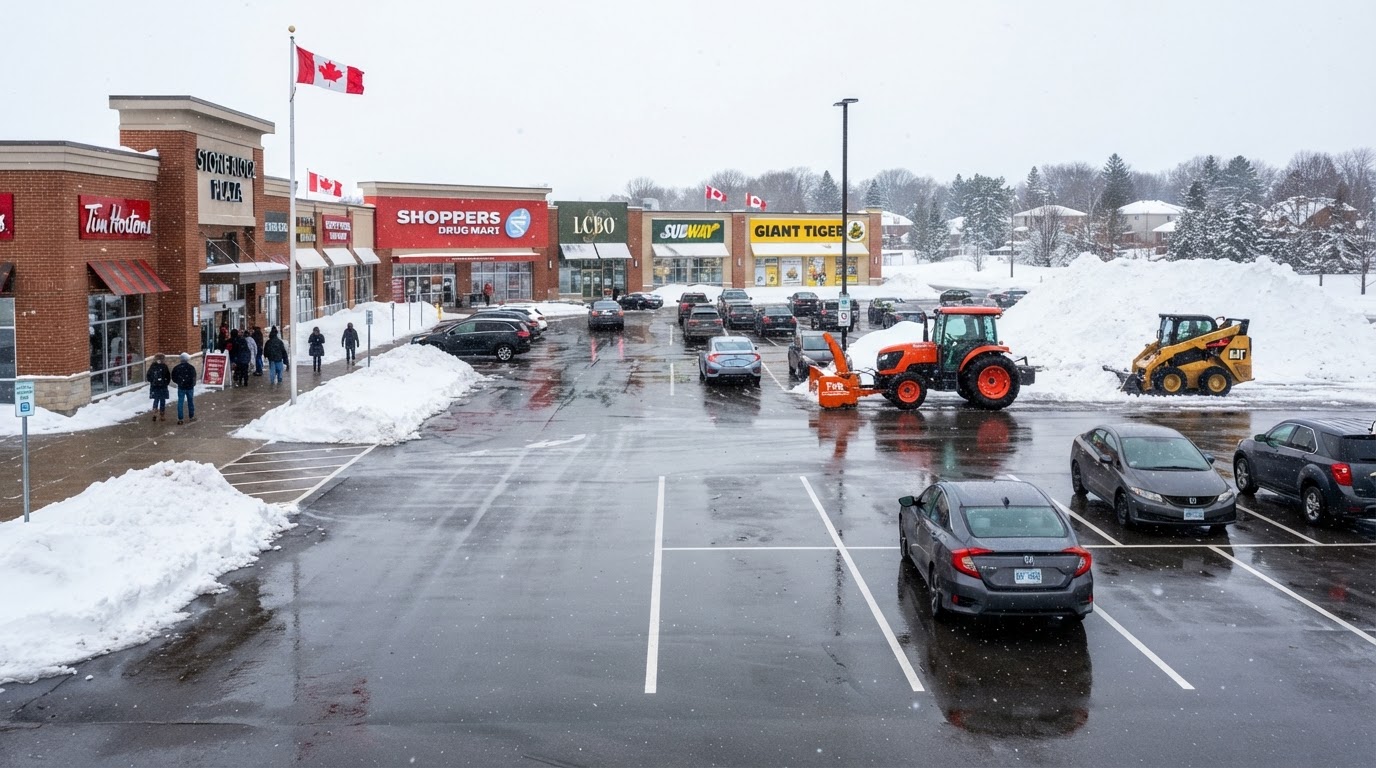
1. When Should Orillia Businesses Book Snow Removal?
The best time to arrange commercial snow removal is before winter weather becomes urgent. For many commercial properties, late summer through fall is the practical planning window.
Why? Because a contractor needs time to understand:
- Property layout
- Parking areas
- Entrances
- Sidewalks
- Loading zones
- Snow-storage locations
- Drainage patterns
- Priority areas
- Service expectations
A pre-season site review is much easier to complete before the property is covered in snow. It also gives property managers time to compare service options instead of making a rushed decision after the first storm.
2. Why Early Booking Matters
Commercial snow removal is different from calling for a one-time residential service. A commercial site may include:
- Large parking lots
- Multiple entrances
- Accessible parking spaces
- Sidewalks
- Loading areas
- Garbage and service zones
- Employee parking
- Customer walkways
- Delivery routes
These areas need to be planned in advance. Early booking can make it easier to define the service scope, identify priority areas, agree on snow-storage locations, establish communication procedures, understand billing, coordinate multiple properties, and avoid confusion during storms. It also gives both the contractor and property manager a clearer picture of what is expected.
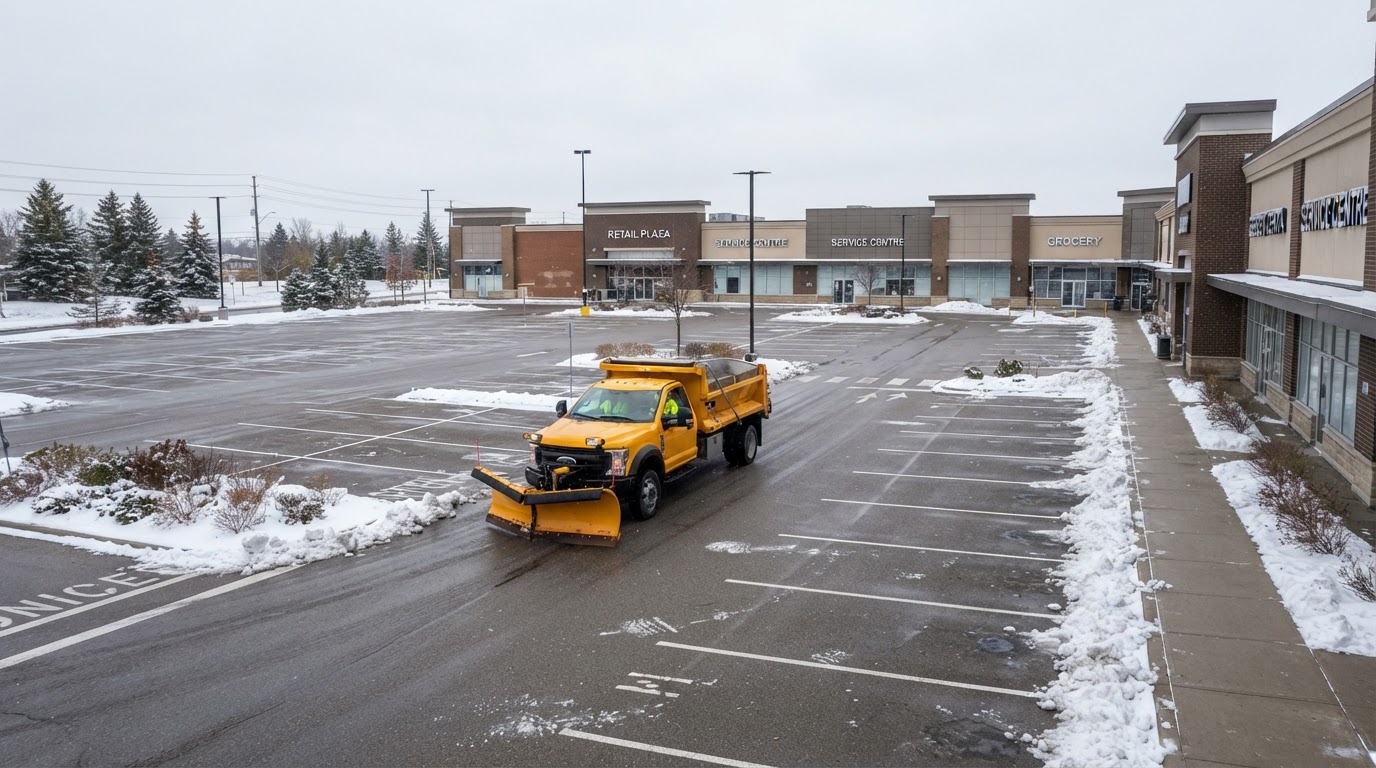
Secure Your Commercial Snow Removal Plan Before Winter
Planning ahead gives property managers time to review parking areas, pedestrian routes, snow storage and the service requirements for their property.
3. Seasonal Contract vs Per-Event Snow Removal
One of the first decisions is how the service will be structured.
Seasonal Snow Removal
A seasonal agreement usually covers a defined winter period for a set service scope. This can be useful for businesses that want predictable budgeting, ongoing winter coverage, one contractor responsible for the property throughout the season, and less need to approve each individual visit. The exact inclusions depend on the contract. Some services may still be billed separately.
Per-Event Snow Removal
Per-event service generally charges based on each snowfall, visit, accumulation level or service performed. This can work for certain properties, but costs may vary from month to month depending on winter conditions.
The better option depends on property size, budget preferences, service frequency, risk tolerance, snowfall patterns, whether salting is included, and the number of properties.

4. What Should Be Included in a Commercial Snow Contract?
A good commercial snow contract should be specific. It should clearly explain the areas and services being covered. Typical items to review include:
- Parking lot plowing
- Driveway and access lanes
- Sidewalks
- Entrances
- Accessible parking areas
- Loading zones
- Salting or sanding
- Ice management
- Snow relocation or hauling, if required
- Service frequency
- Snowfall trigger
- Billing method
- Additional charges
- Communication process
Avoid agreements that are too vague. If the contract simply says "snow removal" without defining the scope, disagreements can happen later.
Need Help Planning Your Commercial Snow Removal Contract?
Every commercial property has different winter maintenance needs. Discuss your site's layout, priority clearing areas and service options with Northern Lakes Contracting.
5. Snowfall Triggers and Service Levels
A snowfall trigger is the amount of accumulation that activates a service. For example, a contractor may begin plowing once snow reaches a specified depth. Different properties may need different service levels.
A retail plaza may need early morning clearing before customers arrive. An industrial property may prioritize access lanes and loading areas. A condominium may require frequent attention to pedestrian areas.
The contract should explain:
- When service begins
- Whether service continues during long storms
- What happens with light accumulation
- Whether salting can occur without plowing
- How refreeze conditions are handled
This is one of the most important sections to understand before signing.
6. Parking Lot Snow Removal
Parking lots are often the largest part of a commercial snow-removal contract. The goal is not simply to move snow. The contractor must also consider:
- Traffic flow
- Parking capacity
- Snow-storage areas
- Curbs
- Islands
- Light standards
- Entrances
- Loading zones
- Drainage
- Pedestrian access
Poor snow placement can create problems later in the season. Large snow piles can reduce visibility, block parking spaces, interfere with drainage and create meltwater that refreezes. Snow-storage planning should be part of the pre-season site assessment.
7. Sidewalks, Entrances and Pedestrian Areas
Commercial properties often have more pedestrian traffic than residential sites. Important areas may include:
- Front entrances
- Side entrances
- Employee entrances
- Sidewalks
- Ramps
- Stairs
- Accessible routes
- Pathways between parking and buildings
These areas may require separate service from parking-lot plowing. The contract should clearly state whether walkway clearing is included and how it is handled. For some properties, pedestrian areas may need attention before the parking lot is fully cleared.
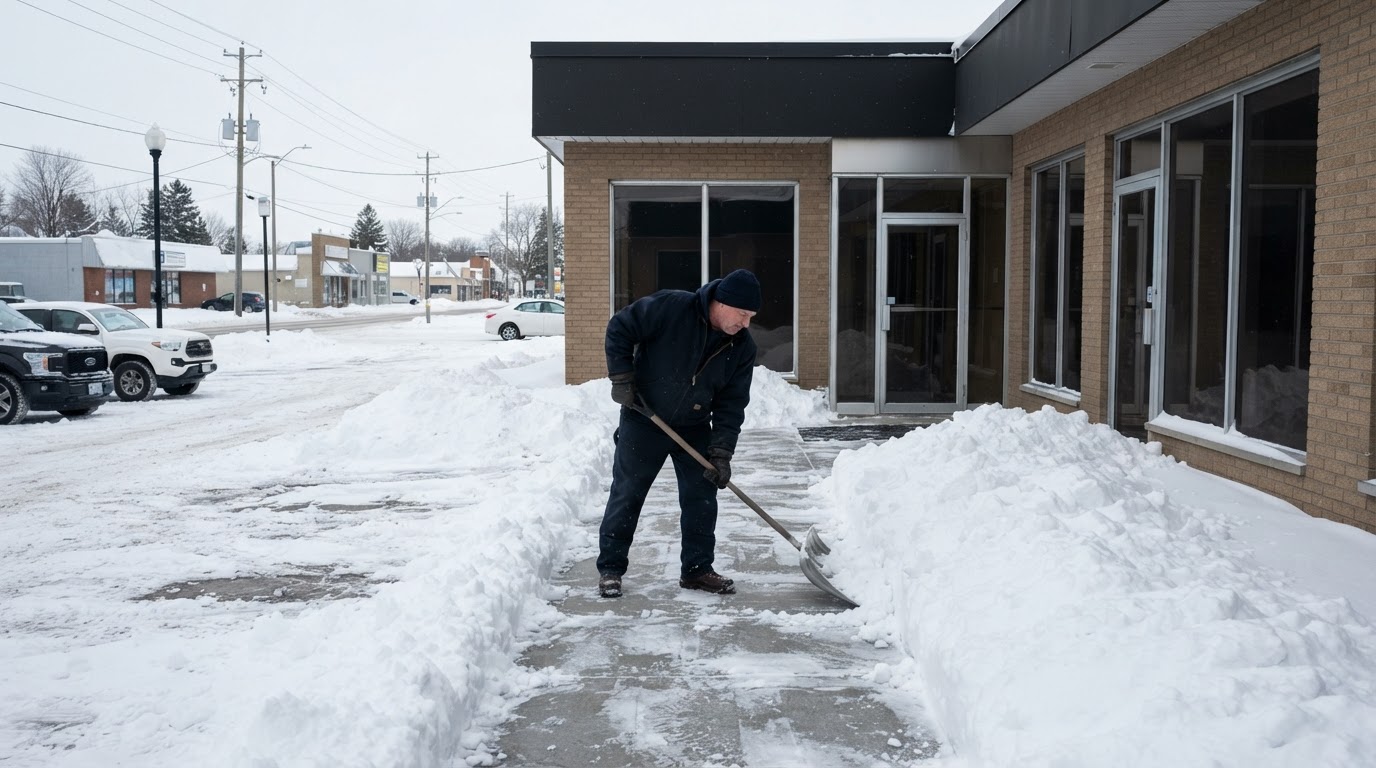
8. Salting, Sanding and Ice Management
Snow removal and ice management are related but different services. A property can be completely plowed and still develop icy conditions because of:
- Freezing rain
- Daytime melting
- Overnight refreeze
- Drainage across walkways
- Shaded areas
- Packed snow
- Vehicle traffic
Commercial winter plans may include salt, sand, other de-icing materials, pre-treatment, and post-plow treatment. The correct approach depends on temperature, surface type, weather conditions, pedestrian traffic, and property use. The contract should explain when ice-control service may be applied and whether it is included or billed separately.

Learn more about our ice management, salting and sanding services for commercial properties.
9. Snow Storage and Snow Pile Planning
Snow has to go somewhere. That sounds obvious, but snow-storage planning is one of the most overlooked parts of commercial winter maintenance. Poorly placed snow piles can:
- Block sightlines
- Reduce parking capacity
- Interfere with drainage
- Block loading areas
- Cover landscaping
- Create meltwater near walkways
- Affect accessible routes
Before winter, identify acceptable snow-storage areas. Consider what will happen if the snow piles become too large later in the season. Some properties may eventually require snow relocation or hauling. That should be discussed before winter rather than after the site runs out of space.
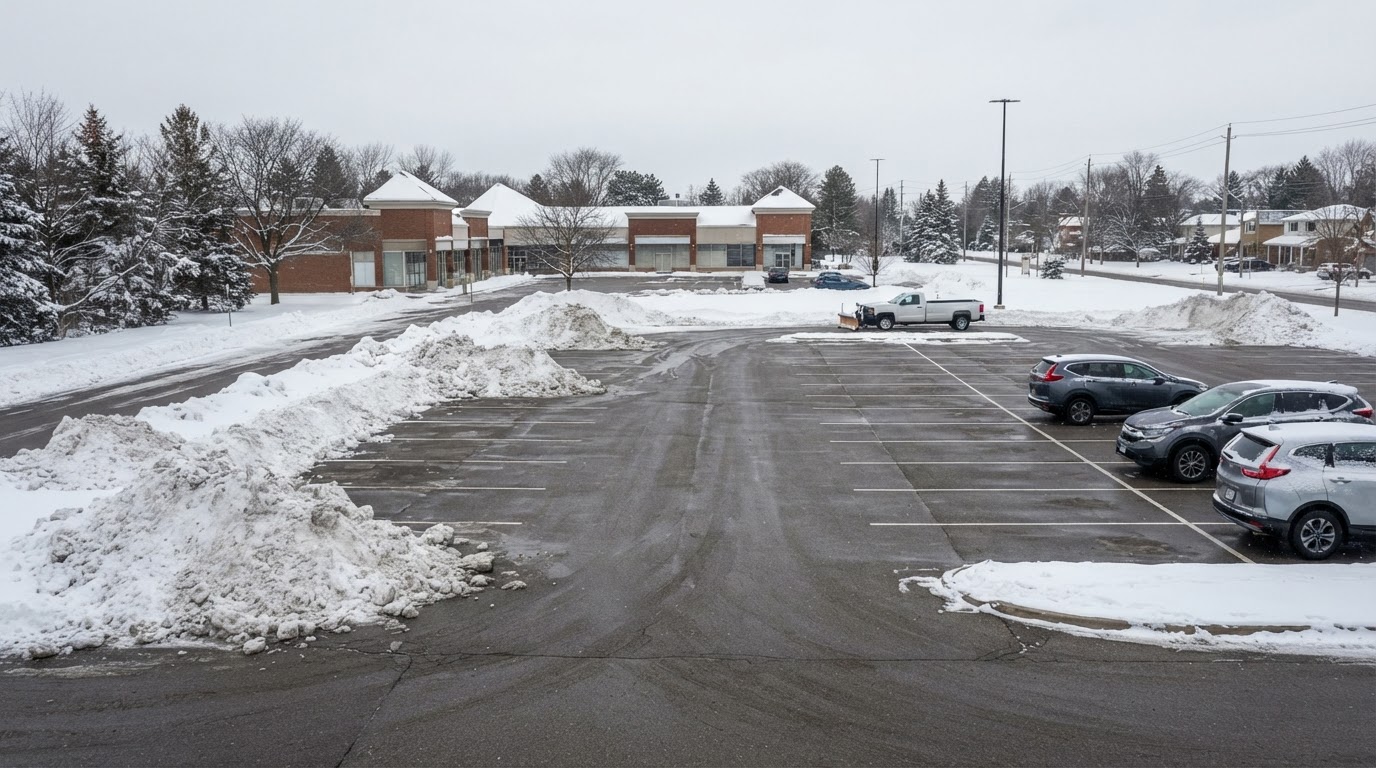
Get Your Property Ready for Ontario Winter Conditions
From parking areas and pedestrian routes to salting and snow storage, a well-planned winter maintenance approach starts with understanding your property.
10. Multi-Property and Property Manager Considerations
Property managers often oversee more than one location. This creates additional planning needs. A multi-property snow-removal program may need to consider:
- Different property layouts
- Varying service priorities
- Separate billing
- Site-specific instructions
- Contact information
- Documentation
- Different snow-storage limitations
Consistency becomes important. Property managers should understand how each property will be serviced and how issues will be communicated. Northern Lakes Contracting provides commercial property services for businesses and property managers across Orillia and surrounding areas. Explore our commercial services for more information.
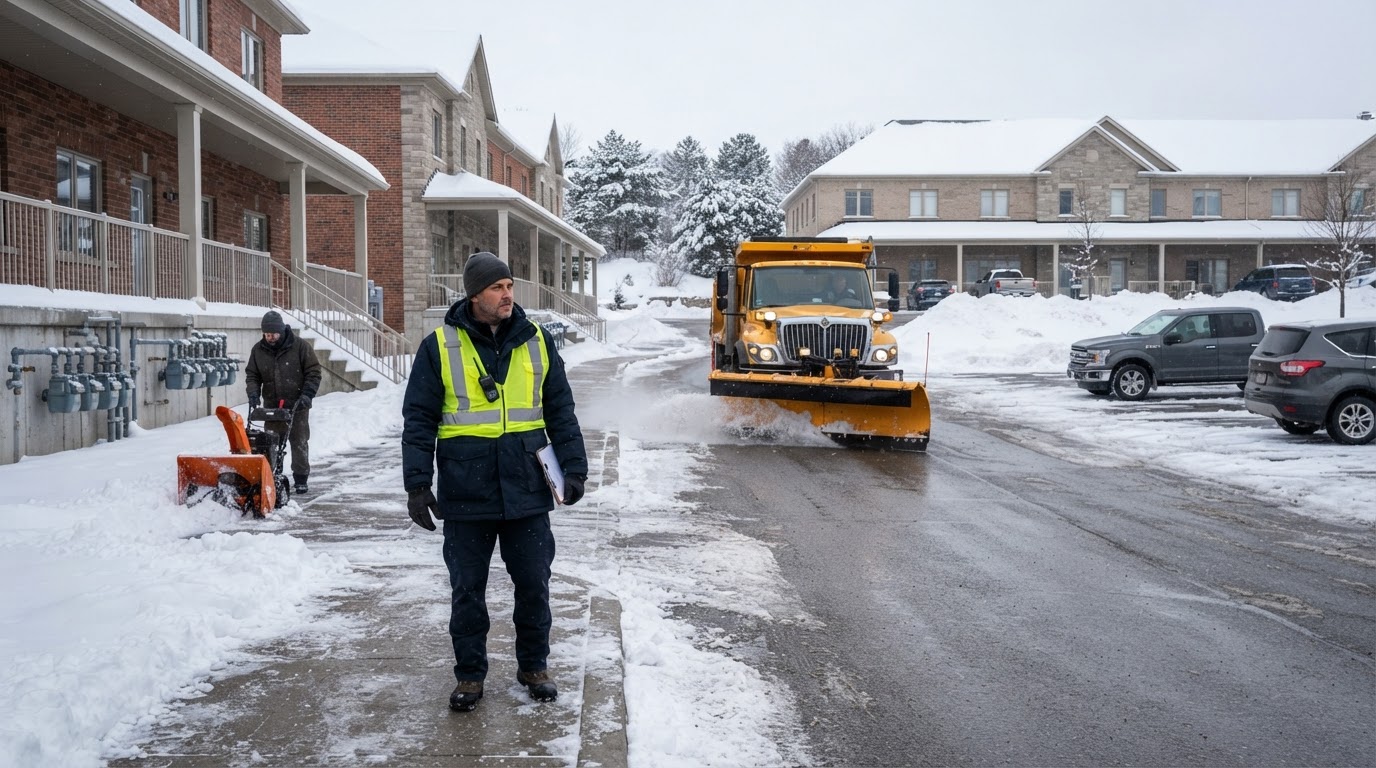
11. Commercial Snow Removal for Different Property Types
Different properties have different winter priorities.
Retail Plazas
Important areas may include customer parking, front entrances, sidewalks, accessible parking, loading areas, and early morning access.
Office Buildings
Priorities often include employee parking, visitor parking, sidewalks, entrances, ramps, and morning accessibility.
Industrial and Warehouse Properties
These sites may require attention to loading docks, truck routes, employee parking, large access lanes, and snow-storage zones.
Condominiums and Apartment Properties
These properties often involve resident parking, visitor areas, walkways, entrances, garbage areas, and shared access routes.
Medical and Professional Buildings
Pedestrian access and entrances may be especially important because visitors can include seniors or people with mobility challenges. The snow plan should match how the property is actually used.
12. Questions to Ask Before Signing a Contract
Before choosing a commercial snow contractor, ask:
- What areas are included? Make sure the contract clearly identifies parking lots, sidewalks, entrances, loading areas and other zones.
- What snowfall depth activates plowing? Understand the trigger.
- Is salting included? Ask whether ice-control materials are included or billed separately.
- Are sidewalks included? Do not assume pedestrian areas are automatically covered.
- What happens during a long storm? Ask whether the property is serviced continuously, periodically or only after the snowfall ends.
- Where will snow be stored? Snow pile locations should be identified in advance.
- Is snow hauling available if needed? Some sites have limited storage.
- How are extra services billed? Understand possible charges before winter starts.
- How is service documented? If documentation is important for your business or property-management process, discuss what records are provided.
- Who should be contacted if there is a problem? Make sure both parties know how communication will work.
13. How Commercial Snow Removal Pricing Is Usually Determined
There is no single price that applies to every property. Commercial snow-removal pricing can depend on:
- Parking lot size
- Number of entrances
- Sidewalks
- Loading zones
- Snowfall trigger
- Salting requirements
- Snow-storage limitations
- Service frequency
- Property type
- Site access
- Number of locations
- Seasonal vs per-event billing
- Snow hauling requirements
A small office building and a large retail plaza have very different winter-maintenance needs. That is why an on-site assessment is usually the best way to develop an accurate commercial quote. Northern Lakes Contracting can review the property and create a winter-maintenance scope based on the site and service requirements. Learn more about our property maintenance services.
Commercial Snow Removal Planning Checklist
Before signing a contract, confirm these areas of your Orillia commercial property:
Property Areas
Parking lots, driveways, access roads, entrances, sidewalks, stairs, ramps, loading areas, and accessible parking.
Service Details
Snowfall trigger, service frequency, ice management, salting or sanding, snow-storage locations, additional charges, snow hauling, and communication procedure.
Property Information
Operating hours, priority entrances, employee/customer access, delivery schedules, areas that must remain clear, and known drainage or icing areas.
Contract Review
Seasonal vs per-event billing, documentation requirements, extra-service billing, and communication protocols.
A clear winter plan helps define what areas will be serviced, when service begins, how ice will be managed, where snow will be stored, what is included in the agreement, and how additional work is handled.
Frequently Asked Questions About Commercial Snow Removal in Orillia
Related Articles
Plan Your 2026–27 Commercial Snow Service Before Winter
The best time to organize commercial snow removal is before snow becomes an emergency. Northern Lakes Contracting provides commercial snow and ice management in Orillia and surrounding communities for property managers, retail properties, offices, industrial sites, condominiums and other commercial properties.