
Ice Management 101: How Simcoe County Businesses Can Prevent Slip-and-Fall Lawsuits
A single slip-and-fall incident on your commercial property can cost your business anywhere from $15,000 to over $100,000 in legal settlements, increased insurance premiums, and lost revenue during litigation. For businesses in Simcoe County, where freeze-thaw cycles create dangerous ice conditions throughout the winter, ice management isn't optional—it's a legal obligation.
Ontario's Occupiers' Liability Act places the responsibility for safe premises squarely on property owners and managers. If a customer, employee, or delivery driver slips on ice at your business, you are legally responsible—unless you can prove you took reasonable steps to maintain safe conditions.
In this comprehensive guide, we'll explain how to implement a professional ice management program that protects your business from liability while keeping your property safe all winter long.
1. Understanding Slip-and-Fall Liability in Ontario
Slip-and-fall claims are among the most common personal injury lawsuits filed against Ontario businesses. The average settlement for a slip-and-fall injury ranges from $15,000 to $50,000, but severe injuries involving broken bones, head trauma, or long-term disability can exceed $200,000.
Beyond the direct settlement, a slip-and-fall claim triggers a cascade of costs: increased insurance premiums (often 20-40% for years after a claim), legal fees ($5,000-$25,000 even if you win), and the reputational damage that comes from being known as an unsafe business. As we explain in our article on hidden liabilities of cheap snow removal, cutting corners on winter maintenance is a false economy.
2. Ontario's Occupiers' Liability Act Explained
The Occupiers' Liability Act requires that anyone who owns or controls a property take reasonable steps to ensure people on the property are reasonably safe. This includes maintaining walkways, parking lots, and entrances free of ice and snow hazards.
The key word is "reasonable." You don't need to keep your property ice-free 24/7—that's impossible during an ongoing storm. But you must demonstrate that you had a system in place to monitor conditions and respond promptly. This is where professional ice management and documentation become your strongest legal defense.
3. The Black Ice Threat in Simcoe County
Black ice is the most dangerous winter hazard because it's nearly invisible. It forms when temperatures hover around freezing—melted snow or rain runs across a surface and refreezes overnight into a thin, transparent sheet of ice that looks like wet pavement.
Simcoe County's proximity to Lake Simcoe and Georgian Bay creates frequent freeze-thaw cycles that are perfect for black ice formation. A professional ice management program includes nighttime "salt patrols" to monitor and treat refreezing surfaces before they become hazards.
4. Anti-Icing vs De-Icing: What's the Difference?
De-icing is reactive: you apply salt after ice has already formed to melt it. This is what most businesses do, but it's the least effective approach.
Anti-icing is proactive: you apply liquid brine or treated salt to surfaces before a storm hits. This creates a barrier that prevents ice from bonding to the pavement, making it much easier to plow and clear. Anti-icing uses less salt, works faster, and keeps surfaces safer.
A professional commercial snow removal program uses both strategies—anti-icing before storms and de-icing after—to maintain continuously safe surfaces.
5. Choosing the Right De-Icer for Your Property
- Rock Salt (Sodium Chloride): Effective to -9°C. Best for large asphalt parking lots. Cheapest option but corrosive to concrete and metal.
- Calcium Chloride: Effective to -32°C. Best for sidewalks and entryways. Faster acting and less corrosive but more expensive.
- Magnesium Chloride: Effective to -23°C. Gentle on concrete and landscaping. Good for environmentally sensitive areas.
- Treated Salt: Rock salt coated with liquid calcium or magnesium. Combines cost-effectiveness with lower temperature performance.
Using the wrong de-icer can damage your concrete walkways, corrode metal railings, and kill surrounding landscaping. A professional contractor selects the right product for each surface on your property.
Don't Risk a Lawsuit This Winter
Professional ice management with documented service logs is your best legal defense. Secure your contract before the first freeze.
6. Documentation: Your Strongest Legal Defense
If a slip-and-fall claim goes to court, the first thing your lawyer will ask for is documentation. Can you prove when the property was last inspected, salted, and cleared? Without records, you have no defense.
Professional ice management contractors provide GPS-tracked service logs showing exactly when crews arrived, what areas were treated, and what materials were applied. These logs are admissible in court and often result in claims being dismissed before trial. This documentation alone justifies the cost of professional service.
7. Sidewalk Safety Protocols
The vast majority of slip-and-fall claims occur on sidewalks and walkways, not in parking lots. Yet many contractors focus exclusively on plowing parking lots and leave sidewalks as an afterthought.
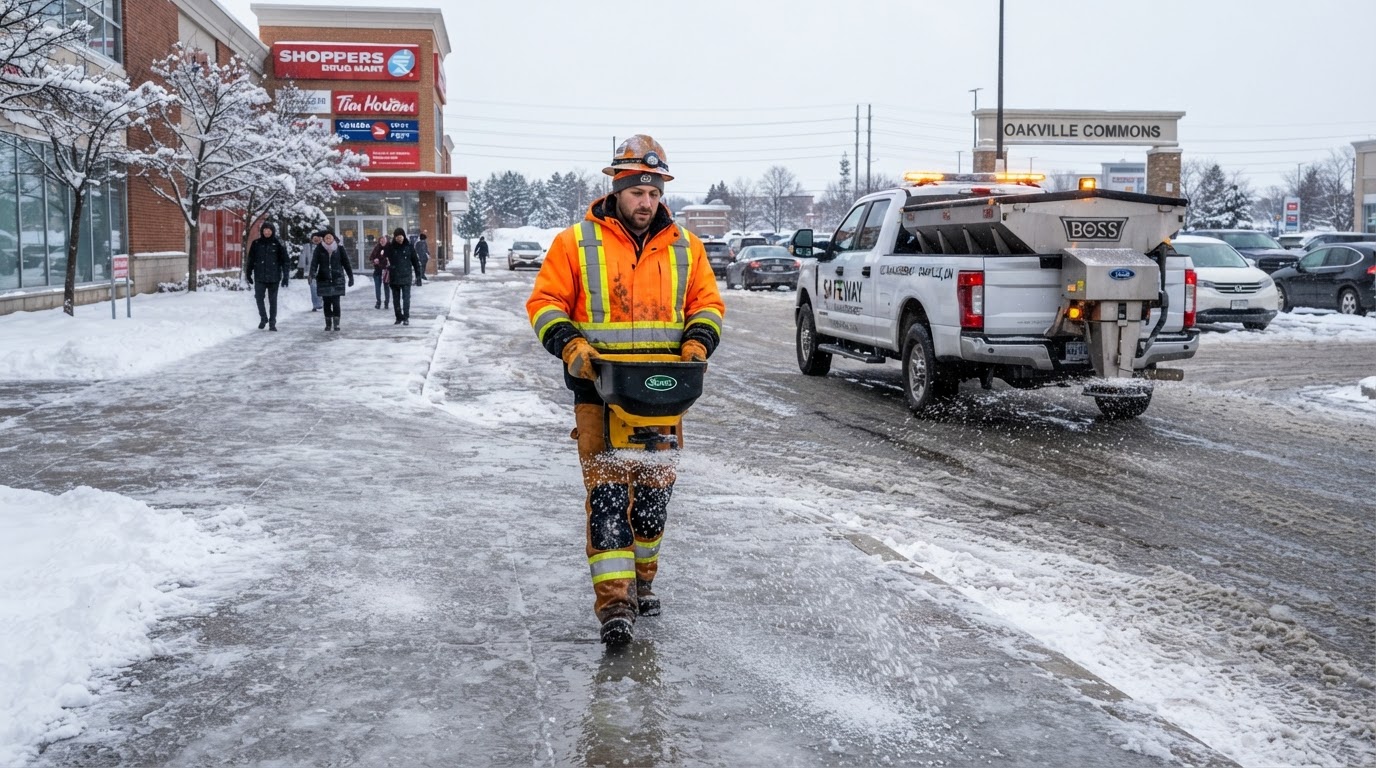
A proper ice management program includes dedicated sidewalk crews with specialized equipment—compact spreaders, power brooms, and hand applicators. Walkways should be treated with premium de-icers (calcium chloride, not rock salt) to prevent concrete damage and ensure safe footing for pedestrians.
8. Parking Lot Ice Management Strategies
Parking lots present unique challenges: large surface areas, drainage issues, and snow piles that melt and refreeze. Effective parking lot ice management includes:
- Proper snow stacking to direct meltwater toward drains, not across the lot
- Bulk salt application with truck-mounted spreaders for large areas
- Regular monitoring of catch basins to prevent ice dams
- Snow relocation when piles block sight lines or parking spaces
Poor drainage is often the root cause of recurring ice problems. If your parking lot has low spots that collect water, you may need grading and drainage improvements to permanently resolve the issue.
9. Staff Training and Winter Awareness
Your employees are your first line of defense. Train your staff to:
- Report icy conditions immediately to management or the contractor
- Place wet floor signs at entrances during winter weather
- Keep entryway mats clean and dry throughout the day
- Document any incidents with photos and timestamps
A well-trained staff that proactively reports hazards can prevent incidents before they happen. Combine this with professional commercial cleaning services to keep entryways safe and dry throughout the winter.
10. How to Choose an Ice Management Contractor
Not all snow removal contractors offer true ice management. When evaluating contractors, ask these critical questions:
- Do you offer anti-icing (pre-storm brine application) services?
- Do you provide GPS-tracked service logs for legal documentation?
- Do you use different de-icers for sidewalks vs parking lots?
- Do you conduct post-storm salt patrols for refreezing conditions?
- What is your response time for emergency ice calls?
For a comprehensive guide on evaluating snow and ice contractors, read our detailed article on choosing the right snow removal contractor.
Conclusion: Protect Your Business This Winter
Ice management is not an area where you can afford to cut corners. A professional program with documented service logs, anti-icing protocols, and dedicated sidewalk crews is your best investment in liability protection. Contact Northern Lakes Contracting to develop a custom ice management plan for your Simcoe County business.