How to Fix Backyard Drainage Before Winter in Severn, Ontario
Backyard drainage problems can seem minor during a dry stretch of weather, but fall rain and winter snowmelt often reveal how well a property actually handles water.
For homeowners in Severn, this can be especially important. Properties in the area may include larger lots, rural settings, wooded sections, sloped yards, ditches, culverts, long driveways, older drainage patterns, and areas where runoff naturally collects. If water is already pooling in your yard during the fall, waiting until spring may allow the problem to become more noticeable after snowmelt.
The good news is that many drainage problems can be improved once the source of the water is properly identified. This guide explains the most common signs of poor drainage, what may be causing the problem, and what homeowners in Severn should consider before winter — including yard grading and drainage solutions, landscaping improvements, and protecting patios and walkways.
1. Why Backyard Drainage Problems Matter Before Winter
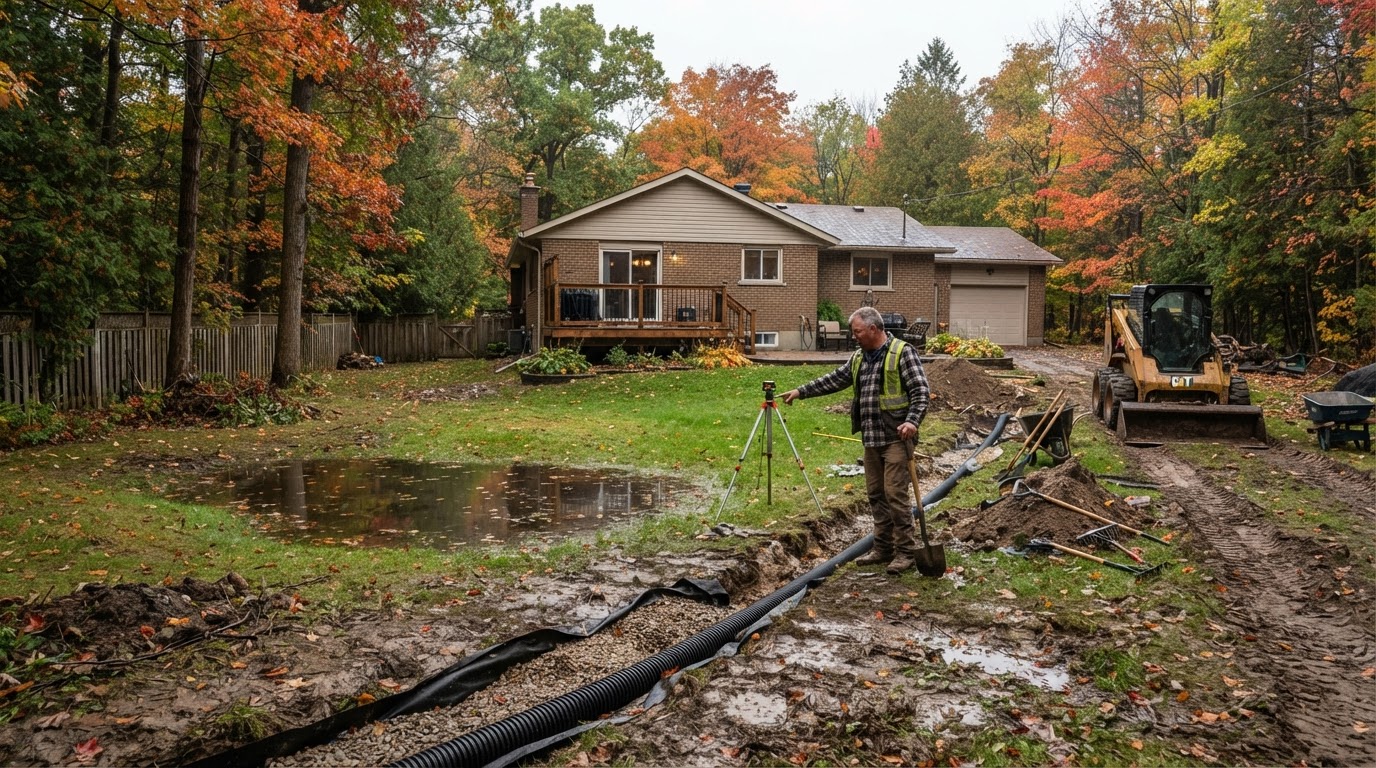
Standing water is more than an inconvenience. If water repeatedly collects in the same area, it can affect lawn health, soil stability, garden beds, patios, walkways, retaining areas, driveway edges, outdoor living spaces, and access around the property.
In the fall, saturated areas may remain wet for long periods because evaporation slows as temperatures drop. Then winter arrives. Water in low areas can freeze, thaw, and refreeze throughout the season. When spring arrives, snowmelt adds even more water to the property.
If the yard already has nowhere for that water to go, the same low areas may become muddy, soft, eroded or difficult to use. That is why fall is a good time to identify drainage problems. Even if larger work cannot be completed before winter, understanding the issue makes it easier to plan the correct solution with a property maintenance contractor.
2. Common Signs of Poor Yard Drainage
Drainage problems are not always obvious. Some appear only after heavy rainfall, while others are visible throughout the season. Common warning signs include:
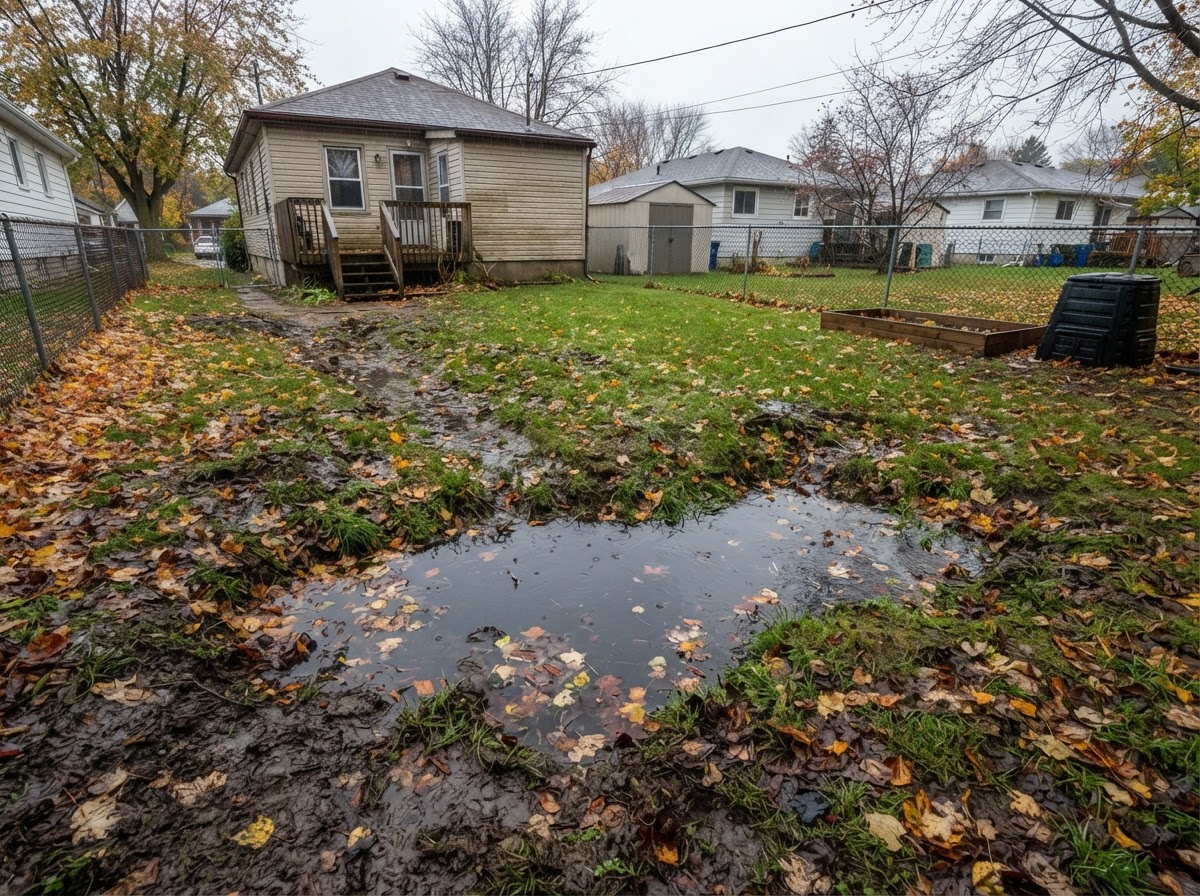
- Water pooling in the same location after rain
- Soggy grass that stays wet for days
- Muddy areas near patios or decks
- Water collecting along fences
- Erosion on slopes
- Washed-out mulch or decorative stone
- Puddles beside driveways
- Water flowing across walkways
- Soft lawn areas
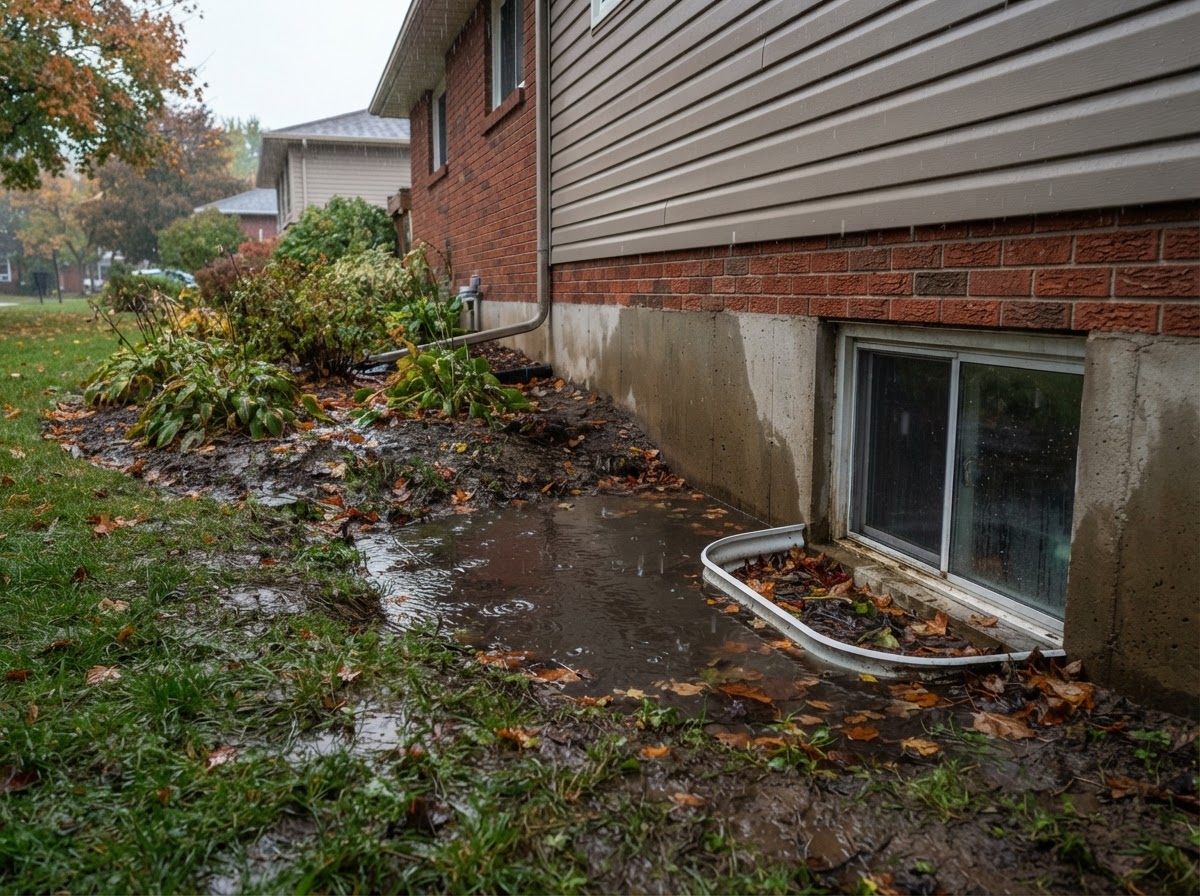
- Water collecting near the foundation
- Ice forming repeatedly in the same winter location
- Lawn areas where grass struggles to grow
Another sign is uneven drying. If most of your yard dries quickly after rain but one section remains wet for several days, the grade or soil conditions in that area may need attention.
3. Why Water Collects in Severn Backyards
There is no single cause of poor drainage. On Severn properties, several factors may be involved.
Low Areas in the Yard
Water naturally flows toward the lowest point. If the yard contains depressions or improperly graded areas, runoff may collect there instead of moving away.
Improper Grading
A yard should generally direct surface water away from structures and toward appropriate drainage areas. If the slope is incorrect, water can move toward the house, patio, deck, driveway or other structures.
Compacted Soil
Compacted soil absorbs water more slowly. This can occur in high-traffic areas, construction zones, equipment paths, or yards where heavy soil has been compressed over time.
Roof Runoff
Downspouts can discharge a surprising amount of water during heavy rain. If they empty into a low area or directly beside the house, they may contribute to pooling.
Natural Terrain
Some Severn properties include wooded terrain, gentle slopes, steep grades, ditches, culverts, and larger rural lots. Water may naturally move from higher areas into lower sections of the property.
Drainage Blockages
Leaves, soil, mulch, snow and debris can block drainage paths. Even a properly graded yard can experience temporary pooling if the intended drainage route is obstructed.
4. Yard Grading and Proper Slope
Grading is often one of the first things to investigate when water repeatedly collects in a yard.
What is yard grading?
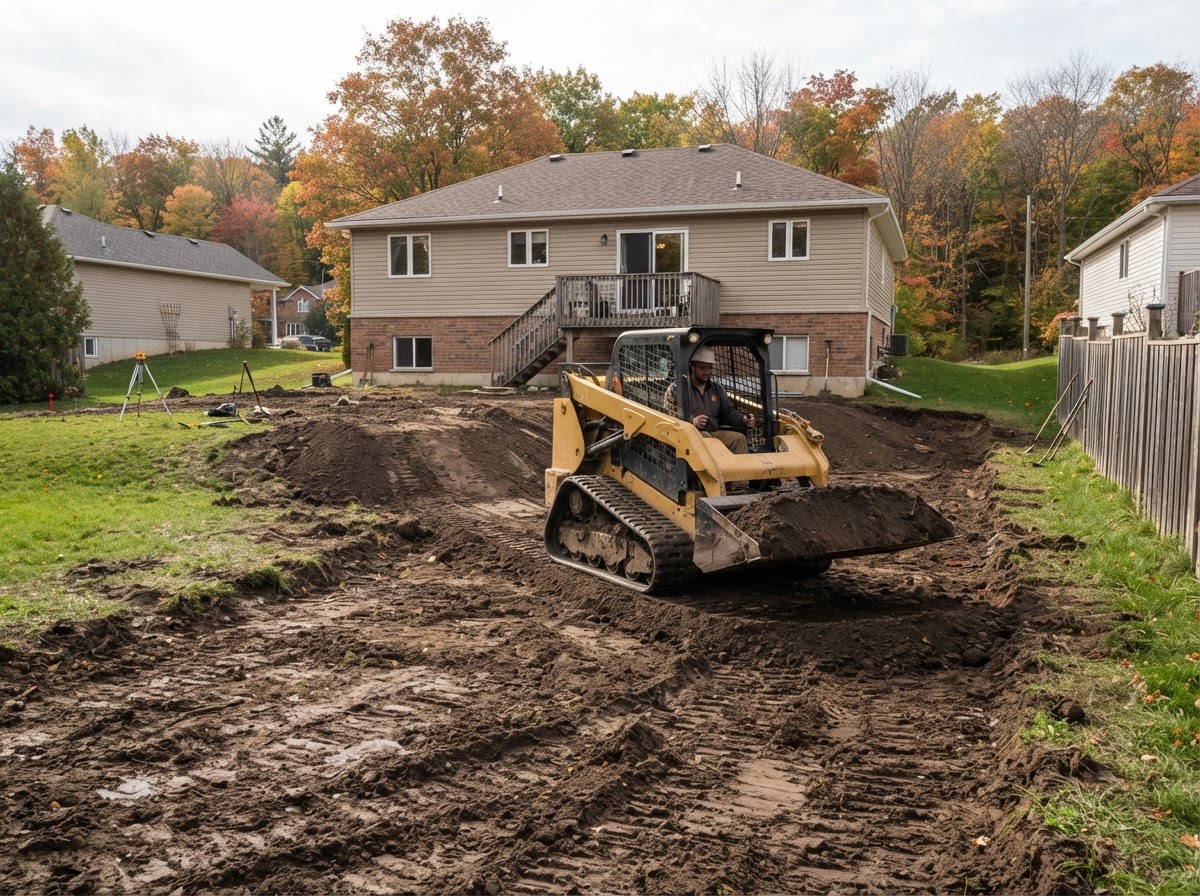
Yard grading means shaping the ground so water flows in the intended direction. The objective is usually to move surface water away from structures and prevent it from settling in low areas.
A grading correction may involve:
- Removing excess soil
- Adding soil to low areas
- Reshaping slopes
- Creating positive drainage away from structures
- Redirecting runoff
- Rebuilding lawn areas after the grade is corrected
The correct solution depends on the existing terrain. It is not simply a matter of adding soil wherever water collects. Adding material in the wrong place can redirect water toward another problem area. That is why the entire drainage pattern should be considered.
Northern Lakes Contracting provides yard grading and drainage services in Severn and surrounding areas for properties dealing with poor slopes, standing water and runoff concerns. Learn more about how yard grading affects your foundation.
Tired of Water Pooling in Your Backyard?
Standing water and soggy lawns can have several causes. Northern Lakes Contracting can discuss your property's drainage concerns and possible improvement options.
5. Drainage Swales and Surface Water Management
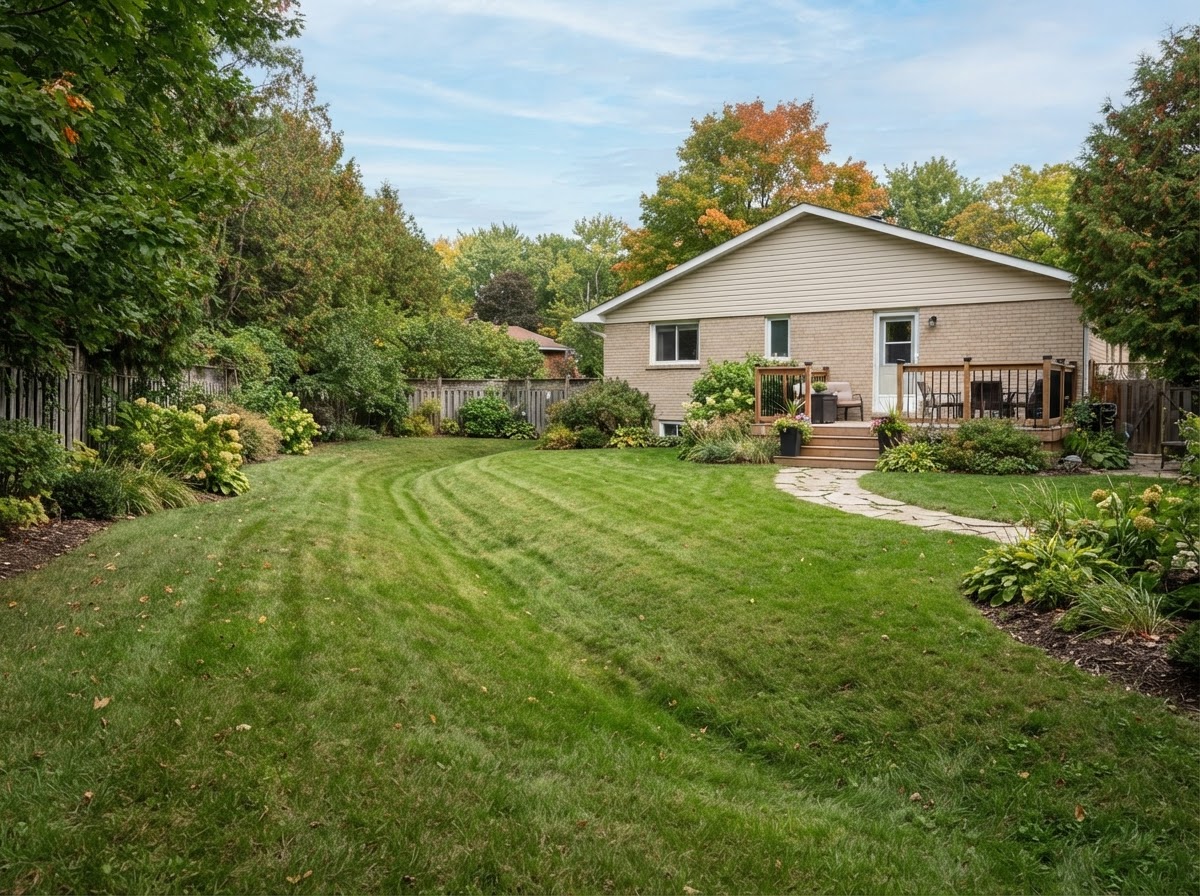
A swale is a shallow, graded channel designed to help move surface water across a property. Swales can be useful where water needs to travel around a home, lawn, garden bed or outdoor living area.
A well-designed swale is usually subtle. It may look like a gentle depression in the lawn rather than a trench. Swales can help:
- Direct runoff
- Reduce pooling
- Protect landscaped areas
- Move water toward a suitable outlet
- Improve drainage across larger properties
For rural and larger Severn lots, surface drainage can sometimes be more practical than relying entirely on underground systems. The key is making sure the water is directed to an appropriate location without creating a new problem elsewhere.
6. Downspout and Roof Runoff
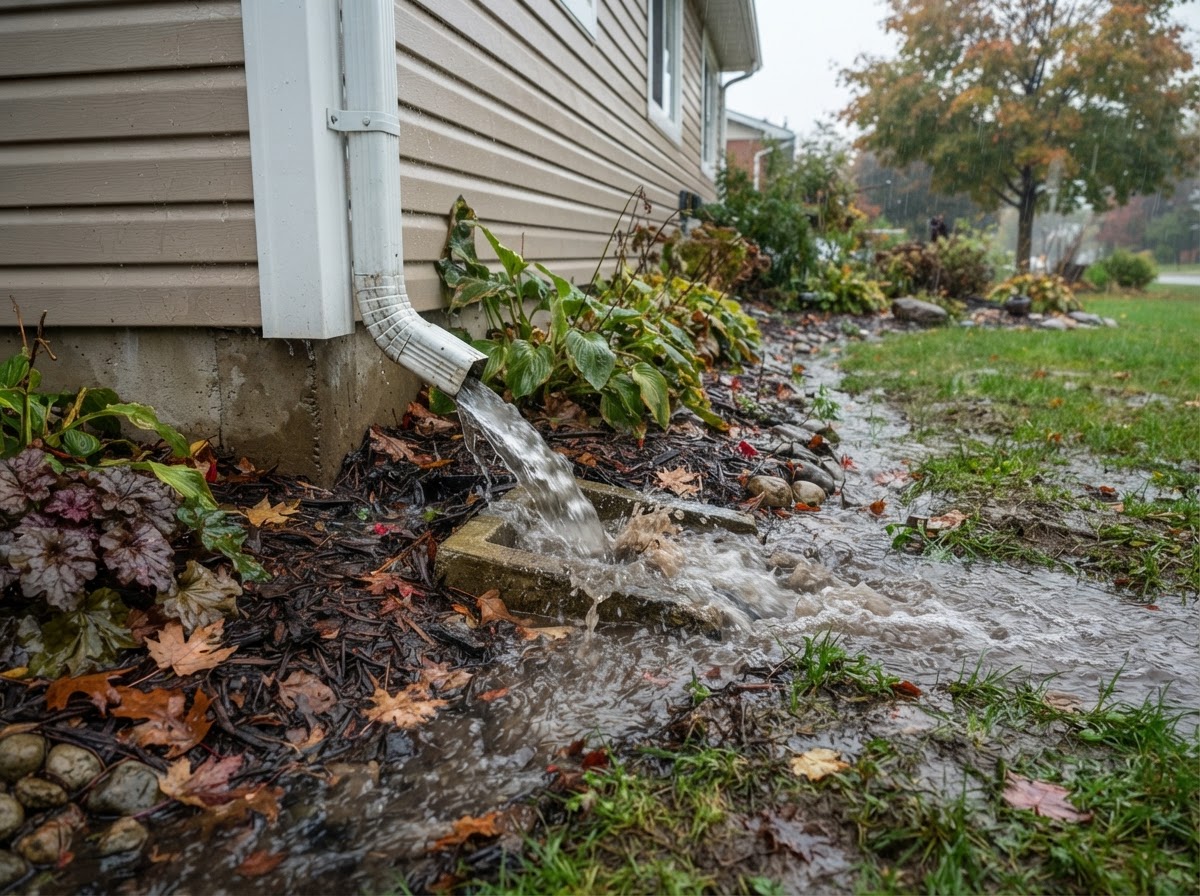
Roof drainage should be considered whenever water collects close to the house. During heavy rainfall, roof surfaces can concentrate a large volume of water into downspouts. If a downspout empties directly beside the foundation or into a low area, that water may contribute to:
- Pooling
- Erosion
- Saturated soil
- Muddy areas
- Water near walkways
- Repeated lawn damage
Simple changes may help in some situations, such as extending discharge farther from the house or directing water toward a properly graded area. However, downspout water should not simply be redirected without considering where it will end up. The goal is to improve the overall drainage pattern, not move the problem five metres away.
7. Drainage Stone and Low Areas
Drainage stone may be useful in certain landscaping applications where water needs room to move through or around an area. It may be incorporated around:
- Drainage channels
- Foundation-adjacent landscaping
- Retaining areas
- Low sections
- Outdoor structures
- Specific drainage systems
But stone alone does not fix every drainage problem. If the underlying grade is wrong, adding decorative or drainage stone may only hide the issue. The source of the water and the intended drainage route should be identified first, ideally as part of a broader landscaping plan.
8. French Drains and Underground Drainage
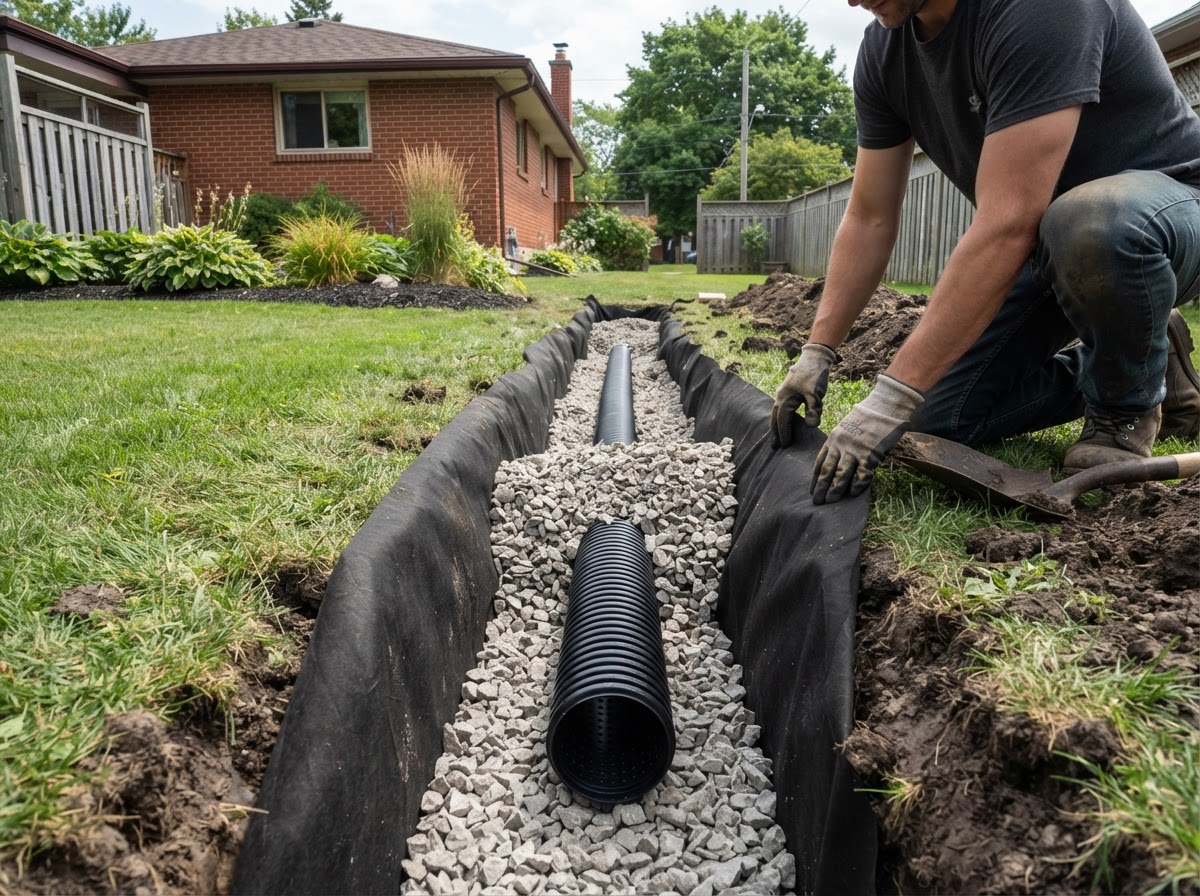
A French drain is an underground drainage system designed to collect and redirect water. A typical system may include:
- A trench
- Drainage pipe
- Drainage stone
- Filter fabric
- A suitable discharge location
French drains can be useful in certain situations, but they are not automatically the best solution for every wet yard. Before installing one, the contractor should consider:
- Where the water is coming from
- How much water is involved
- The property grade
- Soil conditions
- Available discharge locations
- Nearby structures
- Existing drainage paths
Sometimes grading is the more appropriate solution. In other situations, surface grading and underground drainage may work together as part of a complete yard grading and drainage project.
9. Ditches, Culverts and Rural Properties
Many Severn properties are different from smaller urban lots. Some include roadside ditches, culverts, long driveways, wooded edges, larger open lawns, natural slopes, and seasonal runoff routes. These features can affect how water moves across the property.
For example, a blocked culvert may cause water to back up. A driveway may interrupt the natural flow of runoff. A ditch filled with leaves or debris may not drain properly. Snow piles can also block drainage routes during spring melt.
Before winter, it is useful to inspect:
- Driveway culverts
- Drainage ditches
- Swales
- Low roadside areas
- Runoff channels
- Property edges
Keeping these areas clear can help reduce water buildup during heavy rain and snowmelt. This kind of seasonal upkeep is part of a complete property maintenance routine.
10. Drainage Around Patios, Walkways and Driveways
Drainage is also important around hardscaping. Water should not consistently collect along patio edges, between pavers, beside steps, at the bottom of walkways, along driveway borders, or near garage entrances.
Improper drainage can contribute to:
- Settlement
- Erosion
- Joint material loss
- Soft base areas
- Freeze-thaw movement
- Repeated puddling
Good hardscape construction should consider both surface slope and what happens to the water after it leaves the paved area. This is especially important in Ontario, where freeze-thaw cycles place additional stress on poorly drained surfaces. Learn more about patios, walkways and driveways and how proper base preparation prevents freeze-thaw damage.
11. Lawn Restoration After Drainage Work
Drainage work sometimes requires disturbing part of the lawn. Once grading or drainage improvements are complete, the area may need to be restored. Depending on the project, this may include:
- Topsoil
- Grading
- Seed
- Sod
- Edging
- Garden-bed restoration
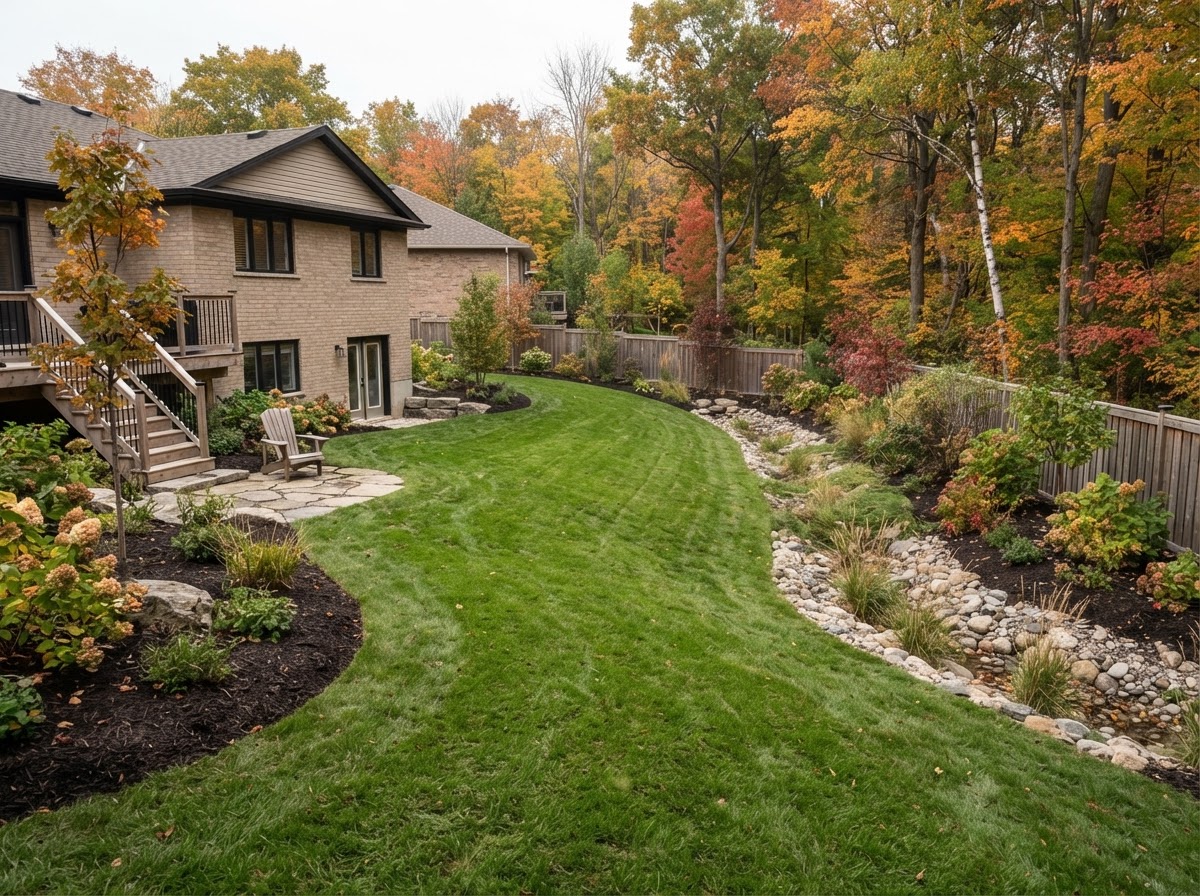
The goal is to improve drainage without leaving the yard looking unfinished. On larger projects, it often makes sense to coordinate drainage and landscaping together. That way the final grade, lawn, garden beds and outdoor spaces work as one system. Explore our sod installation and artificial turf options for lawn restoration.
12. What Happens If Drainage Problems Are Left Until Spring?
Not every drainage issue needs emergency work. However, repeated standing water is worth investigating. If left unresolved, winter and spring conditions may make the problem more noticeable. Possible consequences include:
- Larger muddy areas
- Damaged turf
- Erosion
- Ice accumulation
- Washed-out landscape material
- Soft soil
- Water flowing into neighbouring sections of the yard
- Difficult access
- Increased spring cleanup
The most important thing is understanding the source. A homeowner who documents where water flows during fall rainfall will have much better information when planning drainage improvements. Take photos or videos after a storm — they can be extremely useful during a site assessment.
13. When to Call a Grading and Drainage Contractor
Some minor drainage issues can be improved through routine maintenance. Others require changes to the property. You may want a professional assessment if:
- Water repeatedly pools in the same location
- Water flows toward your home
- Large areas of lawn remain saturated
- Runoff is causing erosion
- A patio or walkway holds water
- Snowmelt creates major spring pooling
- The property has multiple slopes or drainage routes
- You are planning a new patio, deck or landscape project
- Previous attempts to fix the problem have not worked
Drainage should ideally be considered before installing expensive outdoor improvements. For example, if you are planning an interlocking patio, deck or complete backyard transformation, existing drainage issues should be addressed as part of the design rather than after construction. See our backyard transformation services in Severn for more information.
Not Sure Which Drainage Solution Fits Your Property?
Yard grading, drainage swales and French drains address different water-management problems. Discuss your property's conditions before choosing a solution.
Backyard Drainage Solutions for Severn Properties
Depending on the property, drainage improvements may include one or more of the following:
Yard Grading
Adjusting elevations and slopes so surface water moves away from problem areas.
Drainage Swales
Creating shallow channels that guide runoff across the property.
Downspout Routing
Directing roof runoff toward an appropriate drainage location.
Drainage Stone
Using properly placed stone where water movement or filtration is required.
French Drains
Installing underground drainage where surface grading alone may not solve the issue.
Lawn Restoration
Repairing areas disturbed by drainage work with topsoil, sod or seed.
Hardscape Drainage Improvements
Correcting water movement around patios, walkways, steps or driveway areas.
The correct solution depends on the property. There is no universal drainage system that works everywhere.
Plan Your Backyard Drainage Improvements
Addressing drainage issues starts with understanding where water collects, how it moves and what changes may help protect your outdoor space.
Frequently Asked Questions About Backyard Drainage in Severn
Plan Drainage Improvements Before Winter and Spring Runoff
If your Severn property regularly develops standing water, muddy areas or drainage problems, fall is a good time to understand what is happening. Northern Lakes Contracting provides yard grading, drainage and landscaping services in Severn and surrounding communities.