
Commercial Snow Removal Cost in Simcoe County: What Affects the Quote?
Commercial Snow Removal Cost in Simcoe County
Commercial snow removal cost in Simcoe County depends on the usable clearing area, lot configuration, access and traffic, the snowfall trigger, equipment needs, pedestrian areas, ice treatment, snow storage or hauling, and how the contract is structured. Two bids that look similar can cover very different work — one may include only the parking lot while another adds sidewalks, salting, entrances and refreeze checks. The only defensible Northern Lakes Contracting price is a site-specific written quote based on the property and the scope of winter service required.
This guide explains the factors that drive commercial winter-maintenance pricing so property managers, plaza operators and building owners in Simcoe County can compare proposals on equal footing instead of just comparing totals.
What Goes Into a Commercial Snow Removal Quote
A commercial snow quote is built from the physical conditions of the property and the service scope the owner wants covered. The main drivers are:
- Total usable clearing area — the square footage a plow actually travels, not the lot size on a map.
- Lot geometry — islands, curbs, light standards, narrow lanes and corners that slow clearing.
- Access and traffic — how equipment enters and exits, and whether clearing happens before or after business hours.
- The snowfall trigger depth that activates service.
- Pedestrian areas — sidewalks, entrances, accessible routes and ramps.
- Ice treatment — salting, sanding or de-icing material and when it is applied.
- Snow storage — where accumulated snow can be piled on site, and whether hauling is needed later in the season.
- Contract structure — per-visit, seasonal or a defined-scope agreement.
Because every property combines these factors differently, an on-site assessment is the only reliable way to price commercial winter maintenance. That is why Northern Lakes Contracting provides written quotes rather than published per-lot rates.
Lot Size, Geometry, Obstacles & Loading Zones
A large open lot with straight lanes clears faster than a constrained plaza with islands, curbs, light standards and tight corners. Obstacles force slower passes, more hand-work, and more time on site — which affects the quote.
- Islands, curbs and landscape beds that the plow must work around.
- Light standards and bollards that limit equipment size.
- Loading zones and dock approaches that need careful clearing.
- Narrow entrances or single-lane access that slow equipment.
- Adjacent sidewalks and pedestrian paths that may need separate clearing.
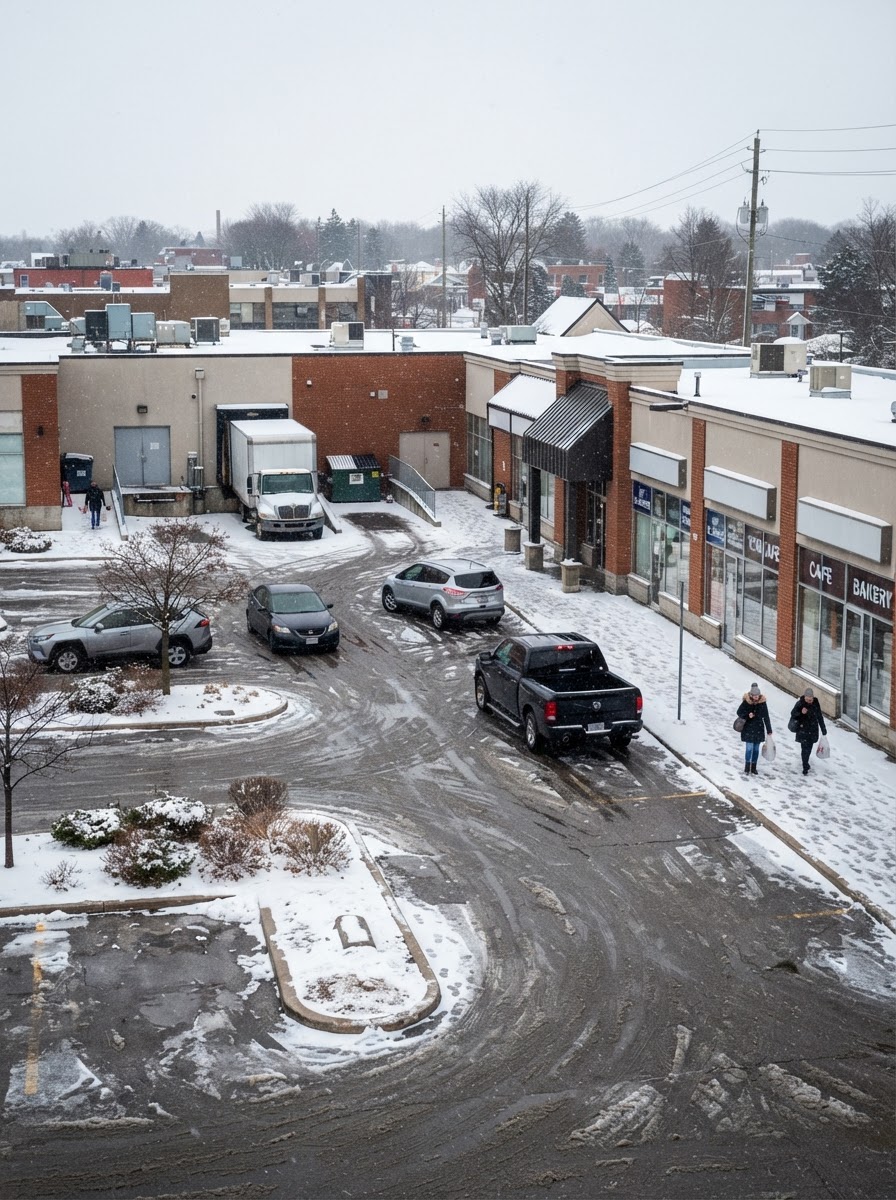
A property with a straightforward layout and wide access can often be serviced more efficiently than a similar-sized lot that is broken up by obstacles — even if both lots are the same total area on paper.
Comparing Winter Maintenance Proposals?
Two bids can cover very different work. Northern Lakes Contracting can review your Simcoe County property and build a winter scope around the areas that actually need clearing.
Per-Visit vs Seasonal vs Defined-Scope Contracts
How the winter agreement is structured changes how cost is calculated. There is no single structure that is always cheaper — the right option depends on budget preference, risk tolerance and how the property is used.
| Pricing Model | How It Works | Best For |
|---|---|---|
| Per-Visit | Customer pays each time qualifying snow-clearing service is performed, based on accumulation and scope. | Properties wanting event-based service and variable winter costs. |
| Seasonal Contract | A fixed price covers an agreed winter scope and service period for the season. | Owners wanting predictable winter budgeting across the full season. |
| Defined-Scope | A hybrid scope built around the property — specific areas, triggers and extras agreed in writing. | Properties with mixed needs (e.g. seasonal lot plowing plus per-visit salting or hauling). |
Per-visit pricing varies with how often it snows; a heavy winter costs more than a light one. Seasonal pricing smooths that out but assumes the average winter. Defined-scope lets an owner tailor the contract to the property rather than choosing between two standard options. None is automatically cheaper — they just distribute risk differently.
Snowfall Trigger Depths & Frequency
A snowfall trigger is the accumulation depth that activates service. A lower trigger (for example, 2 cm) means more visits than a higher trigger (for example, 5 cm or 8 cm). More visits over the season mean more cost under a per-visit model.
- A lower trigger means the lot is cleared more often — safer, but more service events.
- A higher trigger means fewer visits but longer periods of accumulation before clearing.
- High-traffic properties (retail, medical) often need a lower trigger than low-traffic sites.
- Trigger depth is a contract choice, not a contractor promise about exact timing.
Property owners should choose a trigger that matches how the property is used rather than assuming the lowest trigger is always best.
Sidewalks, Entrances, Accessibility Routes & Ice Checks
Pedestrian areas are usually cleared separately from the parking lot and are priced accordingly. A lot plow does not clear walkways, entrances, ramps or accessible routes — those require hand-clearing or smaller equipment, plus ice treatment where refreeze is a risk.
- Sidewalks, entrances and ramps that need hand-clearing.
- Accessible parking and routes that must stay clear.
- Salting, sanding or de-icing applied when ice forms or refreeze is expected.
- Ice checks after daytime melt and overnight refreeze.

If salting and sidewalk clearing are not listed in the contract, they are usually a separate charge — which is why two otherwise similar quotes can end up very different in scope.
Snow Piling, Loss of Parking Spaces, Relocation & Hauling
Snow has to go somewhere. On small lots, acceptable snow storage can run out partway through the season — which affects the quote and may require relocation or hauling later in the winter. Before claiming a service is available, a contractor should verify the site actually supports it.
- Where accumulated snow can be piled on site without blocking parking or sightlines.
- Whether snow storage will fill up before spring and reduce usable parking.
- Whether relocation or hauling off-site may be needed later in the season.
- Whether the lot drains well enough that meltwater will not refreeze across parking.
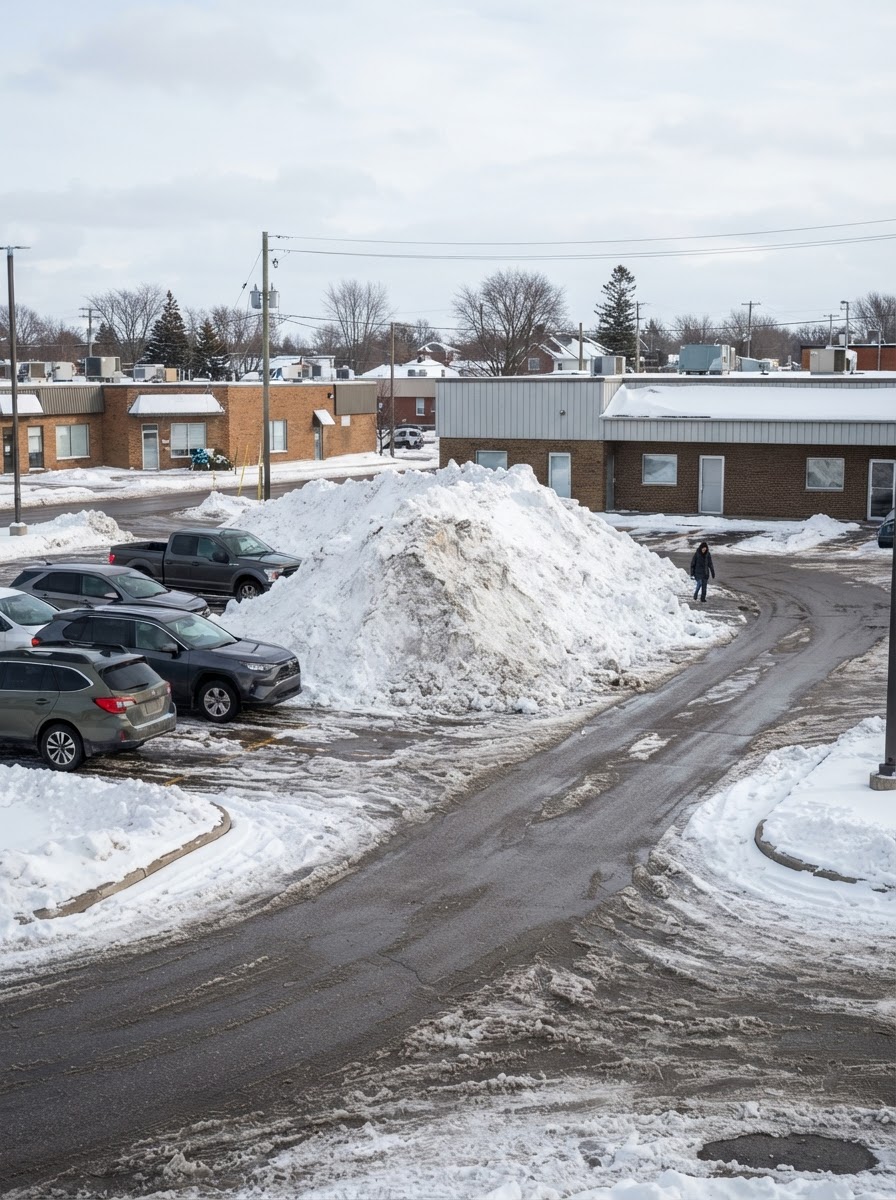
Poor snow placement creates problems later in the season: blocked parking, reduced visibility, meltwater that refreezes across lanes, and snow piles that block loading or accessible routes. A quote that ignores snow storage is not really a complete winter plan.
Want a Quote That Covers the Whole Property?
Use the checklist below to gather the information a contractor needs — then ask for a written winter scope that documents every area and service.
Documentation, Site Maps, Service Boundaries & Quote Questions
A clear contract documents exactly what is included and what is extra. That protects both the owner and the contractor. Before signing, the agreement should answer:
- Which areas are included — parking lot, sidewalks, entrances, loading areas, accessible routes.
- The snowfall trigger depth that activates plowing.
- Whether salting, sanding or de-icing is included or billed separately.
- Where snow is to be stored and whether hauling is available if storage fills.
- How service during long storms is handled — continuous, periodic, or after the storm ends.
- Which services are excluded or billed as additional work.
- How the property and contractor communicate when issues come up.
A written scope with a site map means there is no ambiguity about which areas are covered. Vague language like "snow removal" without detail is where most winter-contract disagreements start.
What to Prepare Before Requesting a Quote
The more accurate information a contractor has up front, the more accurate the quote. Before requesting a commercial snow quote, gather:
- Property address and a site plan or aerial image showing the lot, entrances and pedestrian areas.
- Total parking count and lot layout, including islands, curbs and loading zones.
- Operating hours and when the lot must be clear (opening time, shift changes, delivery windows).
- Priority entrances and any accessible or medical-access routes.
- Current snow-storage areas and whether hauling has been needed in past winters.
- Any known drainage or refreeze problems — low spots, shaded areas, melt paths.
- Whether salting/sanding is required and any surface or environmental restrictions.
- Previous winter scope if switching contractors, so the new quote can be compared on equal footing.
Having this ready shortens the quote process and makes it easier to compare proposals apples-to-apples.
Simcoe County Winter Considerations
Winter conditions across Simcoe County vary with latitude, lake-effect patterns and local terrain — but the practical drivers of commercial snow-removal cost are the same everywhere in the region: lot size, layout, access, pedestrian scope, ice treatment and snow storage.
- Lake-effect snow can produce heavy, localized accumulation that changes how often a lot needs clearing.
- Refreeze is common — daytime melt runs across lots and freezes overnight, creating ice that salting or sanding must address.
- Rural commercial properties may have long driveways, ditches and culverts that affect plowing and snow storage.
- Season length matters: a longer winter means more visits under a per-visit contract and more wear under a seasonal one.
No specific snowfall statistics are cited here because reliable, up-to-date seasonal data should be confirmed from Environment Canada or the municipality before being published. The cost drivers above hold regardless of the exact seasonal totals.
Frequently Asked Questions
Are salting and sidewalks included in commercial snow removal?
Not automatically. Salting, sanding, de-icing and sidewalk clearing are often separate from parking-lot plowing. A complete contract should list each area and each ice-control service explicitly, and state whether ice treatment is included or billed separately.
What affects per-visit pricing for commercial snow removal?
Per-visit pricing depends on the usable clearing area, lot layout and obstacles, the snowfall trigger depth, how many pedestrian areas need hand-clearing, whether salting is included, equipment needs, and whether snow storage is limited enough to require hauling. A larger, more complex lot with a low trigger and full pedestrian scope costs more per visit than a simple open lot.
When is snow hauling or relocation quoted separately?
When on-site snow storage fills up during the season and accumulated snow starts reducing usable parking, blocking sightlines or interfering with drainage. Hauling off-site requires additional equipment and disposal, so it is usually quoted as an additional service rather than folded into a base plowing rate.
How are contract exclusions documented?
Exclusions should be listed in writing in the winter agreement, ideally alongside a site map that shows exactly which areas are included. A clear contract states what is covered (parking lot, sidewalks, entrances, salting, storage), what is excluded, and what triggers an additional charge.
Is a seasonal contract always cheaper than per-visit?
No. A seasonal contract provides predictable budgeting, but in a light winter a per-visit agreement can cost less. The right structure depends on budget preference, risk tolerance and how the property is used — not on which option is universally cheaper.
How do I get a commercial snow-removal quote from Northern Lakes Contracting?
Contact Northern Lakes Contracting with the property address, a site plan or aerial image, operating hours, priority entrances, current snow-storage areas and any known drainage or refreeze problems. An on-site assessment can then be arranged and a written, site-specific quote prepared.
Plan Winter Maintenance Before the First Snowfall
The most accurate commercial snow-removal price comes from reviewing the property, the areas that need service, the desired trigger and the level of winter service required — not from a published rate card. Pre-season planning gives time to walk the site, agree on snow storage and document the scope before weather becomes urgent.