Artificial Turf vs Natural Sod: Which Saves You More Over 10 Years in Simcoe County?
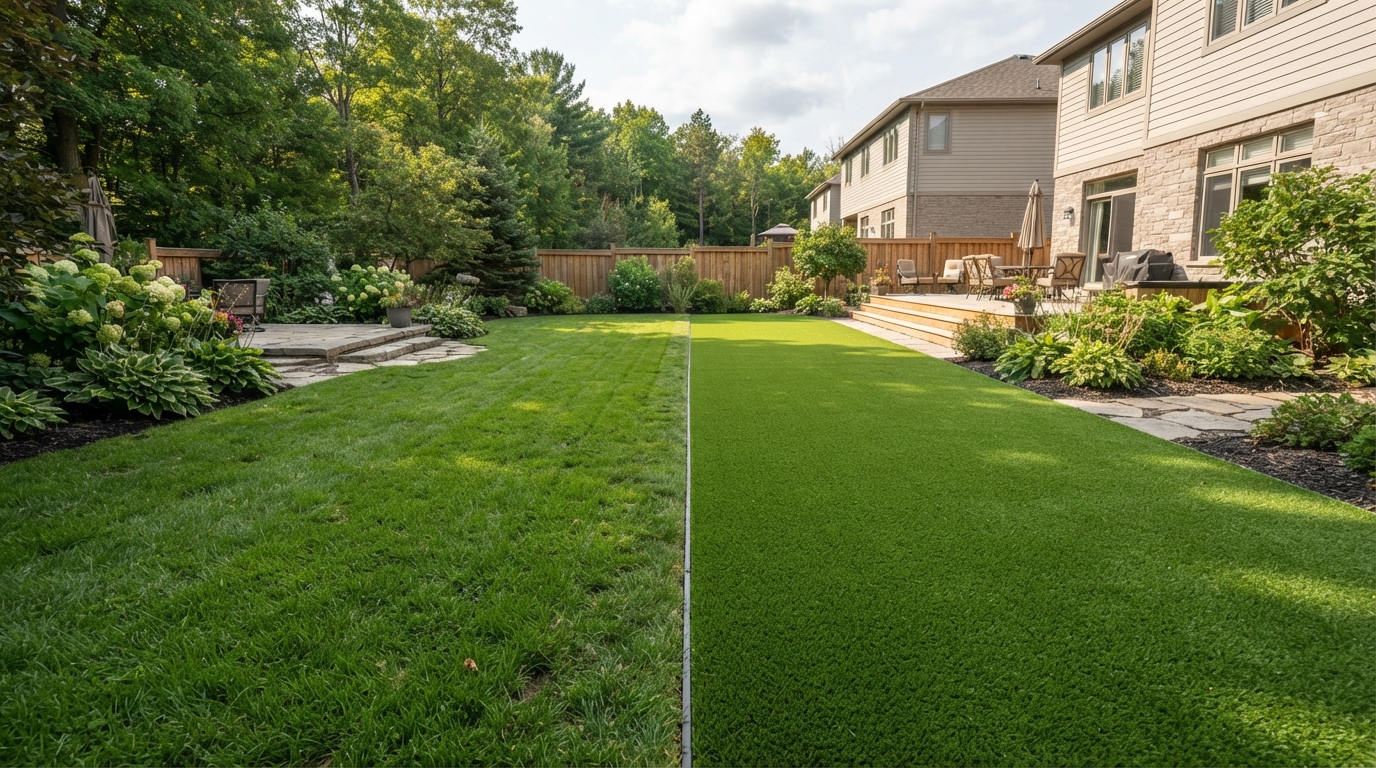
Homeowners across Simcoe County are increasingly weighing the pros and cons of artificial turf versus natural sod. With Ontario's unpredictable climate, rising water costs, and busy lifestyles, the decision isn't as straightforward as it used to be. The real question is: which option saves you more money over a 10-year period?
At Northern Lakes Contracting, we install both natural sod and artificial turf for homeowners in Orillia, Muskoka, and Simcoe County. We don't push one option over the other—we help you make the right choice based on your property, budget, and lifestyle.
In this detailed comparison, we break down the true 10-year cost of each option, including installation, maintenance, water, and replacement, so you can make an informed decision for your Ontario property.
1. Upfront Installation Costs
The initial price tag is where most homeowners start—and it's where the biggest difference exists. Natural sod installation in Simcoe County typically costs $2 to $4 per square foot, including soil preparation and installation. For a standard 1,000 sq ft lawn, that's $2,000 to $4,000.
Artificial turf installation costs significantly more upfront—$8 to $15 per square foot, including excavation, base preparation, and installation. For the same 1,000 sq ft lawn, you're looking at $8,000 to $15,000. The higher cost reflects the extensive ground preparation required: excavating 4-6 inches of soil, installing a crushed stone base, and laying the turf with proper drainage.
2. Natural Sod Maintenance Costs Over 10 Years
Natural sod requires ongoing maintenance throughout its lifespan. Here's what the average Simcoe County homeowner spends annually:
- Mowing: $40-60 per cut, weekly from May to October = $800-1,500/year
- Fertilizer: 3-4 applications per year = $200-400/year
- Aeration & overseeding: Annual = $150-300/year
- Weed control: = $100-200/year
- Watering: Summer irrigation = $300-600/year
10-year maintenance total: $15,500 to $30,000. That's on top of your initial installation cost. This is the hidden cost that surprises many homeowners.
3. Artificial Turf Maintenance Costs Over 10 Years
Artificial turf isn't zero-maintenance, but it's dramatically lower. Annual maintenance includes:
- Brushing: Once or twice per year to lift fibers = $100-200/year
- Debris removal: Leaf blowing and cleaning = $50-100/year
- Infill top-up: Every 3-4 years = $200-400 (amortized ~$75/year)
- Weed treatment: Occasional = $50/year
- Water: None required
10-year maintenance total: $2,750 to $4,500. That's a fraction of natural sod maintenance costs.
4. Water and Irrigation Savings
In Simcoe County, summer water restrictions are becoming more common. Natural lawns require approximately 1-1.5 inches of water per week during the growing season. For a 1,000 sq ft lawn, that's 600-900 gallons per week.
Over a 20-week growing season, a natural lawn uses 12,000 to 18,000 gallons of water. At municipal water rates, that's $300-600 per summer. Artificial turf uses zero water for irrigation, though occasional rinsing to remove dust or pet waste is recommended.
5. Lifespan and Replacement Costs
Quality artificial turf lasts 15-20 years with proper maintenance. Natural sod, if well maintained, can last indefinitely—but in practice, Ontario's harsh winters often cause patches that require overseeding or re-sodding every 5-7 years.
Factor in one partial re-sodding at year 7 ($1,000-2,000) for natural lawns. Artificial turf typically doesn't need replacement within the 10-year window, though the infill may need refreshing.
6. How Each Performs in the Ontario Climate
Ontario's freeze-thaw cycles, heavy snow, and short growing season present unique challenges. Natural sod goes dormant in winter and can suffer from snow mold, vole damage, and salt burn from driveway runoff. It recovers in spring but requires active management.
Modern artificial turf is designed to withstand freezing temperatures without becoming brittle. Snow can be shoveled off it (gently), and it drains quickly during spring thaw. However, it can get hot in direct summer sun—something to consider if you have pets or small children who play on the lawn.
Not Sure Which Is Right for You?
Book a free consultation and we'll assess your property, lifestyle, and budget to recommend the best option.
7. Impact on Property Value
A lush, well-maintained natural lawn is a strong selling point for potential buyers. It signals care and curb appeal. However, a poorly maintained natural lawn can actually hurt property value.
Artificial turf is becoming more accepted, but some buyers still view it as a negative. The key is quality installation that looks natural. High-end turf installations in landscaping projects in Orillia and Muskoka are increasingly common, especially for low-maintenance cottage properties and commercial buildings.
8. Environmental Considerations
Natural sod sequesters carbon, produces oxygen, and supports local ecosystems. It also absorbs rainwater, reducing runoff. However, the maintenance—gas mowers, fertilizers, and pesticides—has an environmental cost.
Artificial turf eliminates mowing emissions and fertilizer runoff but is made from petroleum-based materials and eventually ends up in a landfill. It also doesn't absorb rainwater, which means proper drainage installation is critical to avoid contributing to stormwater issues. For environmentally conscious homeowners, the choice depends on which trade-offs you're willing to accept.
9. Best Use Cases for Each Option
Choose natural sod if:
- You enjoy gardening and don't mind weekly mowing
- You have pets or children who play on the lawn regularly
- Environmental impact is a top priority
- You're on a tight upfront budget
Choose artificial turf if:
- You have a cottage property and want zero maintenance between visits
- Your lawn has heavy shade where grass won't grow
- You want a perfect-looking lawn year-round with no effort
- You're willing to invest more upfront for long-term savings
- You have areas with heavy foot traffic or pet damage
10. The 10-Year Total Cost Analysis
| Cost Factor | Natural Sod | Artificial Turf |
|---|---|---|
| Installation (1,000 sq ft) | $2,000-$4,000 | $8,000-$15,000 |
| 10-Year Maintenance | $15,500-$30,000 | $2,750-$4,500 |
| 10-Year Water | $3,000-$6,000 | $0 |
| Replacement (Year 7) | $1,000-$2,000 | $0 |
| 10-Year Total | $21,500-$42,000 | $10,750-$19,500 |
Over 10 years, artificial turf saves the average Simcoe County homeowner $10,000 to $22,500 compared to natural sod. The break-even point is typically 4-6 years, after which the savings compound annually.
Conclusion: The Smart Money Choice
If you plan to stay in your home for more than 5 years and want to minimize long-term costs, artificial turf is the clear financial winner. If you love the look and feel of real grass, enjoy yard work, or plan to sell within a few years, natural sod remains a great choice. Either way, contact Northern Lakes Contracting for a free consultation and quote.